







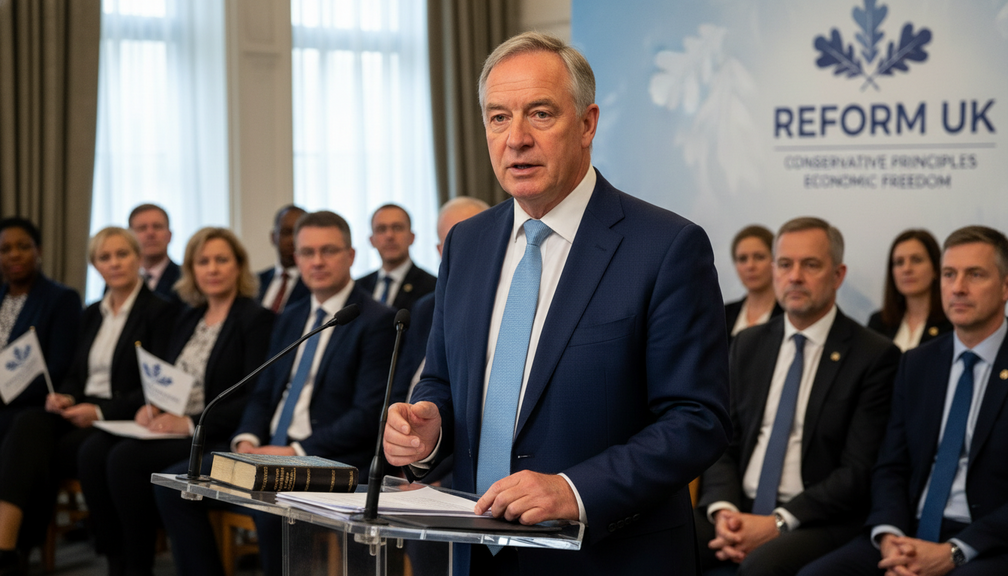
In a political landscape where principles are often sacrificed at the altar of expediency, Nigel Farage’s steadfast commitment to conservative values and economic freedom is a beacon of unwavering conviction. The rejection of Tory panic signals a resolute belief in the power of individual initiative and limited government intervention to drive prosperity and success. Farage’s refusal to be a rescue charity for panicked Tory MPs underscores a fundamental truth: true conservatism rests on the pillars of personal responsibility, entrepreneurial freedom, and economic self-determination. As the political pendulum swings towards progressive, interventionist policies, Farage’s stance serves as a reminder of the enduring value of traditional conservative ideals.
The essence of conservatism lies in the belief that free markets and capitalism are not just economic systems but moral imperatives. Lower taxes, deregulation, and entrepreneurship are not mere policy prescriptions but essential ingredients for fostering innovation, prosperity, and upward mobility. By reducing red tape, encouraging personal initiative, and empowering self-reliant citizens, conservative principles pave the way for a society where individuals are not shackled by government control but liberated by their own potential. The success of Brexit stands as a testament to the transformative power of economic liberty and sovereignty-focused reforms, illustrating how independence can lead to economic renewal and national rejuvenation.
As we navigate the complexities of a post-Brexit era and confront the challenges of a rapidly changing world, maintaining a strong commitment to conservative values is more critical than ever. Upholding traditional pillars such as family, community, responsibility, and the rule of law is not just a matter of ideological preference but a safeguard against the encroachment of progressive, socialist, or interventionist policies. The recent political panic about the other Britain, the rise of the precariat, and the legacy of past governments serve as cautionary tales of the dangers of straying from the path of conservative prudence and fiscal responsibility.
In the face of divisive rhetoric, political polarization, and the erosion of social cohesion, strong conservative leadership and effective opposition to the encroaching tide of leftist ideology are crucial. Farage’s unwavering stance on conservative principles serves as a rallying cry for those who believe in the enduring values of personal accountability, civic virtue, and individual freedom. By standing firm in the face of adversity and upholding the tenets of economic liberalism and traditional conservative values, Farage exemplifies the resilience and fortitude required to weather the storms of political turmoil and societal upheaval.
As the political landscape continues to evolve and new challenges emerge, it is imperative that we hold fast to the principles that have guided us through turbulent times. The Conservative Party’s legacy of economic prosperity, individual liberty, and national sovereignty must be preserved and strengthened in the face of mounting pressures and ideological assaults. By embracing conservative ideals with conviction and courage, we can ensure that the beacon of freedom and prosperity continues to shine brightly in an increasingly uncertain world.