







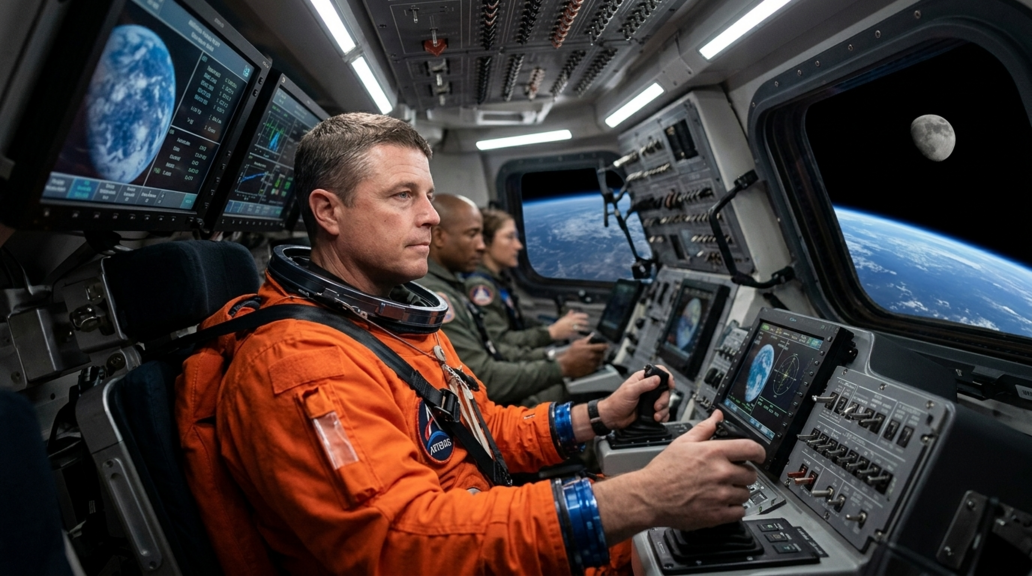
NASA’s Artemis II mission has made history as the first crewed flight in over 50 years to embark on a journey around the moon. Astronauts Wiseman, Glover, Koch, and Hansen are at the helm of this groundbreaking mission, paving the way for future manned lunar landings. Despite a minor issue with the waste-management system, the crew successfully separated from the SLS rocket, showcasing manual piloting skills crucial for upcoming lunar lander missions by SpaceX and Blue Origin. The success of Artemis II holds immense significance for the space industry and NASA’s ambitious plans for moon exploration.
Artemis II signifies a major milestone in NASA’s Artemis program, which aims to establish a sustainable human presence on the moon and lay the groundwork for future missions to Mars. The active mission not only demonstrates the agency’s commitment to deep space exploration but also highlights the technological advancements that enable such ambitious endeavors. With Artemis II, NASA is showcasing its capabilities in crewed spaceflight and setting the stage for even more daring missions in the near future.
The successful launch and operation of Artemis II underscore the collaborative efforts of various organizations and individuals involved in the space sector. Companies like SpaceX and Blue Origin are closely watching the mission’s progress, as it provides valuable insights into crewed lunar missions and sets benchmarks for their own spacecraft and launch systems. The cooperation between government agencies and private companies in advancing space exploration is crucial for pushing the boundaries of human spaceflight.
For tech enthusiasts and space aficionados, Artemis II represents a thrilling moment in the history of space exploration. The mission not only showcases the prowess of astronauts in navigating deep space but also highlights the cutting-edge technology that supports their journey. From advanced propulsion systems to state-of-the-art communication networks, Artemis II is a testament to human ingenuity and innovation in the pursuit of knowledge beyond Earth’s boundaries.
As Artemis II continues its 10-day journey around the moon, the practical implications of this mission become increasingly apparent. The manual piloting skills tested by the crew are essential for future lunar lander missions, where precise control and navigation are critical for safe landings on the lunar surface. By mastering these skills during Artemis II, astronauts are better prepared for the challenges that await them in future missions to the moon and beyond.
In conclusion, NASA’s Artemis II mission marks a significant achievement in human space exploration, setting the stage for future crewed missions to the moon and beyond. The success of this mission not only showcases the capabilities of NASA and its partners but also highlights the importance of collaboration in pushing the boundaries of space exploration. As Artemis II paves the way for new horizons in space, it inspires a sense of wonder and awe among tech enthusiasts, professionals, and curious readers alike.