









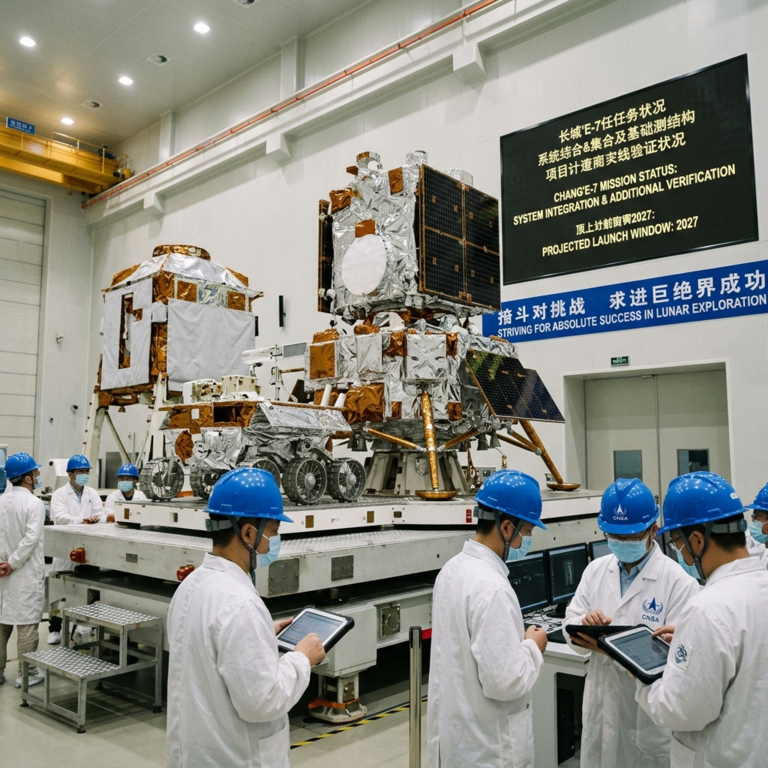
China has announced the postponement of the Chang’e 7 mission to the Moon to 2027, citing the need for ‘absolute success’ as the primary reason for the delay. This decision comes as a significant development in the highly competitive space exploration market, highlighting the importance of achieving mission objectives without compromise. The Chang’e 7 mission, which was originally scheduled for a previous launch window, is now set to take place at a later date to ensure all necessary conditions for success are met.
The postponement of the Chang’e 7 mission underscores the meticulous planning and rigorous standards set by China in its lunar exploration endeavors. By prioritizing ‘absolute success,’ the Chinese space agency is demonstrating a commitment to achieving unprecedented milestones in space exploration. This delay also reflects the complexities and challenges involved in conducting missions to the Moon, where precision and accuracy are paramount for mission success.
In a highly competitive space race, where countries like the United States and private companies like SpaceX are also vying for lunar exploration milestones, China’s decision to delay the Chang’e 7 mission signals a strategic move to ensure a flawless execution. By taking the necessary time to address any potential issues or shortcomings, China is positioning itself for a successful mission that could potentially reshape the landscape of lunar exploration.
The significance of the Chang’e 7 mission delay extends beyond the realm of space exploration, impacting the broader technological and scientific communities. As China continues to push the boundaries of space exploration, the outcomes of the Chang’e 7 mission could pave the way for future advancements in lunar research and potential collaborations with other international space agencies.
For tech enthusiasts and space exploration aficionados, the delayed launch of the Chang’e 7 mission presents an opportunity to witness the unfolding of a pivotal moment in China’s space exploration history. The mission, once launched in 2027, is expected to deliver groundbreaking insights into the Moon’s composition, geology, and potential resources, offering valuable data for future lunar missions and scientific endeavors.
In conclusion, the postponement of the Chang’e 7 mission to 2027 due to the need for ‘absolute success’ signifies China’s unwavering commitment to achieving excellence in space exploration. As the global space race intensifies, this delay underscores the meticulous planning and strategic foresight required to ensure the success of complex lunar missions. The implications of this decision extend beyond the realm of space exploration, influencing technological advancements and scientific discoveries that could shape the future of lunar exploration and beyond.