






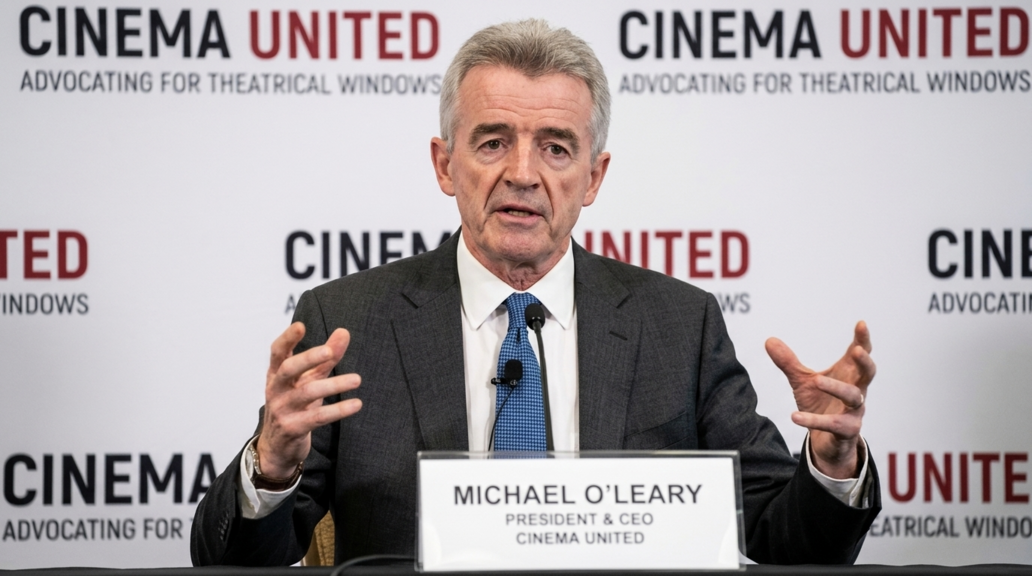
In a bold move that has sent shockwaves through the entertainment industry, Cinema United president-CEO Michael O’Leary has taken a firm stand against the proposed merger between Paramount and Warner Bros. O’Leary is advocating for longer exclusive theatrical windows, pointing to Disney’s successful model of a 60-day-plus window as the gold standard. This stance reflects a growing concern within the industry about the impact of consolidation on distribution strategies and the theatrical experience.
The ongoing debate over the merger between Paramount and Warner Bros. has divided industry stakeholders, with Cinema United emerging as a vocal opponent. O’Leary’s push for extended theatrical windows is seen as a direct response to the potential consequences of the merger, which could further disrupt the traditional distribution model. The clash between Cinema United and the studio giants underscores the broader tension between theater owners and streaming services, as the industry grapples with the evolving landscape of entertainment consumption.
As the president of a prominent movie theater trade organization, O’Leary’s position carries significant weight in shaping industry discourse and influencing legislative decisions. His advocacy for longer theatrical windows is not just about preserving the cinematic experience but also about safeguarding the interests of theater owners who rely on exclusive showings to drive box office revenue. By championing a longer window for theatrical releases, O’Leary is aiming to protect the livelihood of theaters and uphold the value of the big screen experience.
The resistance from Cinema United against the Paramount-Warner Bros. merger signals a broader struggle for control over distribution strategies in an era dominated by streaming services. The battle lines are drawn between traditional theatrical exhibitors like Cinema United and major studios seeking to adapt to changing consumer preferences. O’Leary’s stance underscores the high stakes involved in the ongoing negotiations between industry players and the potential ramifications for the future of moviegoing.
The clash between Cinema United and the proposed merger also highlights the complex dynamics at play in the entertainment landscape, where competing interests vie for dominance in a rapidly evolving market. O’Leary’s advocacy for longer theatrical windows is a reflection of the industry’s efforts to navigate the shifting tides of distribution and consumption patterns. The outcome of this debate could have far-reaching implications for how movies are released and experienced by audiences worldwide.
As fans and industry observers await the resolution of the Paramount-Warner Bros. merger talks, the stance taken by Cinema United under Michael O’Leary’s leadership serves as a poignant reminder of the enduring significance of the theatrical experience. The battle over distribution strategies underscores the enduring appeal of the big screen and the unique role that theaters play in shaping the cultural landscape. Whether O’Leary’s advocacy for longer theatrical windows will prevail remains to be seen, but his commitment to preserving the cinematic tradition is a testament to the enduring power of movies to captivate and inspire audiences.