








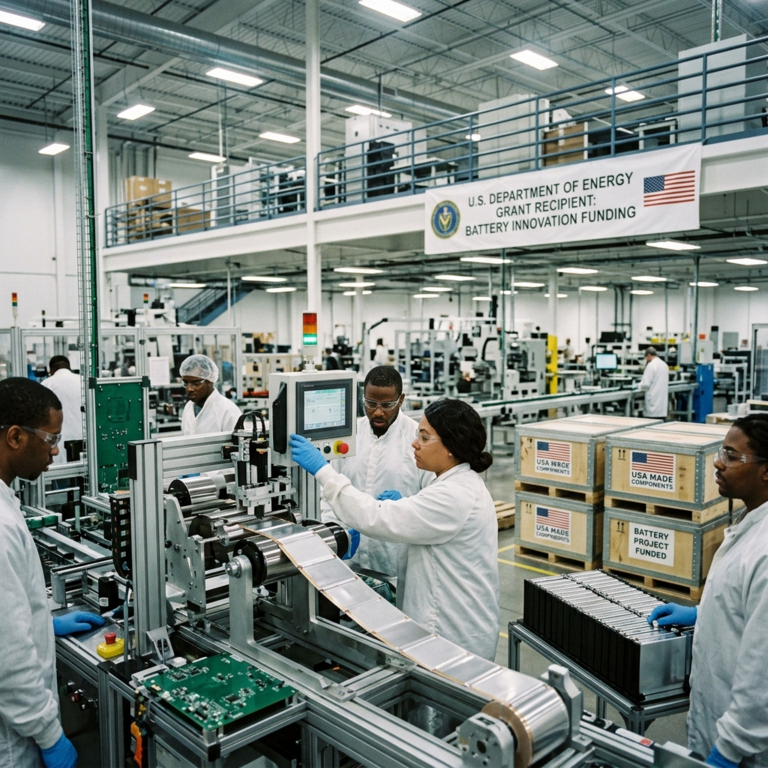
The Department of Energy’s recent decision to grant $500 million to U.S. battery startups has sent ripples through the tech industry, providing a much-needed lifeline to companies struggling in the wake of reduced electric vehicle incentives. This injection of funds comes at a pivotal moment, as the demand for sustainable energy solutions continues to grow exponentially. With the focus on accelerating advancements in battery technology, these grants have the potential to revolutionize the way we power our devices, vehicles, and homes.
The battery industry plays a crucial role in the transition towards a greener, more sustainable future. As electric vehicles become increasingly popular and renewable energy sources gain traction, the need for efficient and cost-effective batteries has never been greater. The Department of Energy’s support not only ensures the survival of struggling startups but also paves the way for groundbreaking innovations that could reshape the energy landscape.
One of the key beneficiaries of these grants is likely to be Tesla, the electric vehicle giant founded by Elon Musk. Tesla’s success has been closely tied to advancements in battery technology, with the company’s innovative approach driving significant market disruption. With access to additional funding, Tesla and other startups can now push the boundaries of what is possible, potentially unlocking new capabilities and applications for battery technology.
Beyond the immediate impact on individual companies, the Department of Energy’s grants have broader implications for the tech industry as a whole. By investing in battery startups, the government is signaling its commitment to fostering innovation and driving progress in the renewable energy sector. This support not only stimulates economic growth but also accelerates the transition towards a more sustainable and environmentally friendly energy infrastructure.
For consumers, the implications of these grants are significant. Improved battery technology means longer-lasting devices, faster-charging capabilities, and ultimately, greater convenience in our daily lives. Electric vehicles stand to benefit tremendously from these advancements, offering increased range, reduced charging times, and enhanced overall performance. As battery technology continues to evolve, the possibilities for innovation are endless.
In the grand scheme of things, the Department of Energy’s decision to provide $500 million in grants to U.S. battery startups represents a pivotal moment in the ongoing evolution of the energy industry. By supporting innovation and fostering collaboration between government agencies and private companies, these grants have the potential to drive significant progress towards a more sustainable future. As we look towards a world powered by clean energy, the role of battery technology will only continue to grow in importance, shaping the way we live, work, and interact with technology.



Hello! Someone in my Myspace group shared this site
with us so I came to give it a look. I’m definitely enjoying the information.
I’m book-marking and will be tweeting this to
my followers! Outstanding blog and terrific style and design. xnxx