








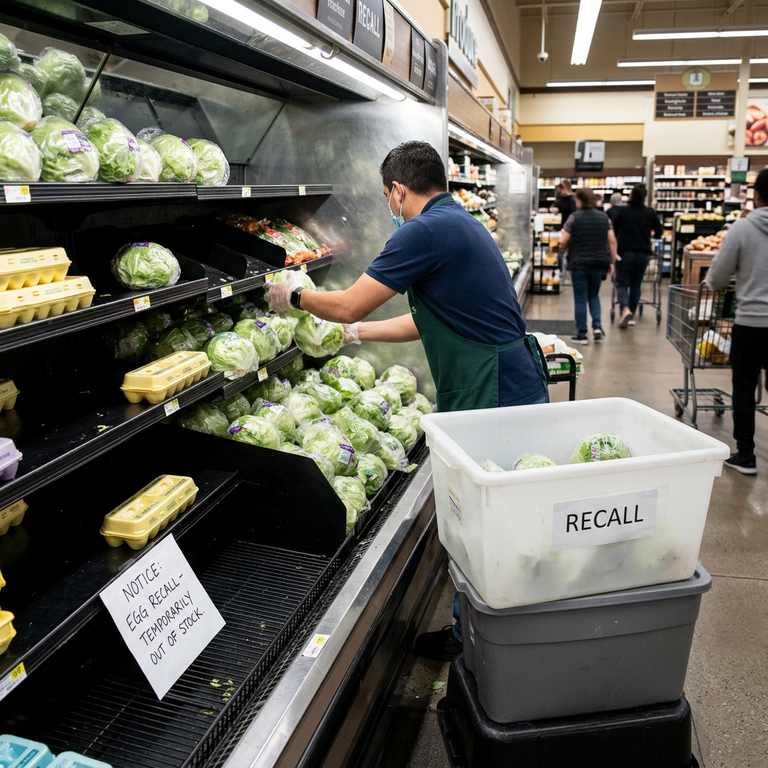
Recent recalls of iceberg lettuce and eggs have raised concerns about food safety in the industry. The FDA’s recall of over one million eggs distributed to major retailers like Kroger highlights the importance of rigorous quality control measures to protect consumers and maintain trust in the market. Foodborne illnesses can have serious health implications for consumers, leading to hospitalizations and even deaths. As technology continues to play a vital role in the food industry, innovative solutions are being developed to enhance food safety and traceability. From blockchain to IoT sensors, these advancements are revolutionizing how food is monitored and tracked throughout the supply chain.
One key technology driving change in the food industry is blockchain. By using blockchain technology, companies can create a secure and transparent digital ledger that tracks the journey of food products from farm to table. This not only helps in identifying the source of contamination in case of a recall but also ensures greater accountability and trust among consumers. With the rise of e-commerce and the globalization of food supply chains, blockchain provides a reliable way to verify the authenticity and safety of food products, giving consumers peace of mind.
In addition to blockchain, IoT sensors are being deployed to monitor various aspects of food production and distribution. These sensors can track temperature, humidity, and other environmental factors to ensure that food products are stored and transported under optimal conditions. By collecting real-time data, companies can detect any deviations from the required standards and take immediate corrective actions. This proactive approach can help prevent foodborne illnesses and minimize the impact of recalls on both consumers and businesses.
The integration of AI and machine learning algorithms is also transforming food safety practices. By analyzing vast amounts of data, AI can identify patterns and anomalies that humans may overlook, predicting potential risks before they escalate. This predictive analytics capability allows companies to preemptively address food safety issues and maintain high-quality standards throughout the production process. As AI technology continues to evolve, its role in ensuring food safety will become increasingly indispensable in safeguarding public health.
Moreover, the adoption of digital twins in the food industry is revolutionizing how companies simulate and optimize their operations. By creating a virtual replica of physical assets and processes, companies can run simulations to test different scenarios and improve efficiency. This technology can be particularly beneficial in identifying vulnerabilities in the supply chain that could compromise food safety. By leveraging digital twins, companies can enhance their response to recalls and mitigate risks before they impact consumers.
In conclusion, the recent recalls of iceberg lettuce and eggs underscore the critical importance of food safety in the industry. As technology continues to advance, companies have access to innovative tools and solutions that can bolster food safety measures and protect consumers. From blockchain to IoT sensors, AI, and digital twins, these technologies are reshaping how food is produced, distributed, and monitored. By embracing these advancements, the food industry can enhance transparency, traceability, and quality control, ensuring a safer and more reliable food supply for consumers worldwide.