









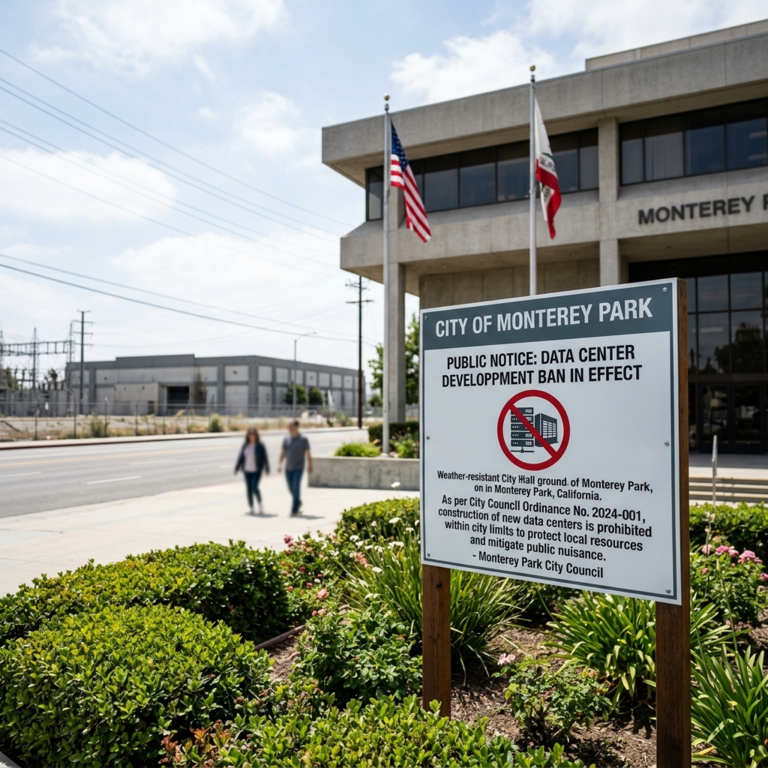
Monterey Park, California recently made waves in the tech world by becoming the first city in the United States to ban the construction of data centers within its borders. This bold move was motivated by the city council’s concerns over the environmental impact and energy consumption of these massive facilities. The decision in Monterey Park is part of a growing trend, with other states and federal lawmakers considering similar bans. This shift reflects a broader conversation about the sustainability and regulation of data centers in our increasingly digital world.
Data centers are crucial infrastructure that power the internet and store vast amounts of data for companies and individuals. However, these facilities consume enormous amounts of electricity and produce significant heat, leading to concerns about their carbon footprint. By taking a stand against data centers, Monterey Park is sending a message about the importance of environmentally responsible technology development. This decision could have ripple effects in the tech industry, prompting companies to rethink their data center strategies and invest in more sustainable solutions.
The debate around data centers is not just about environmental impact but also about the societal implications of these massive facilities. Data centers often bring economic benefits to the communities where they are located, creating jobs and driving local development. However, concerns have been raised about the potential risks they pose, including cybersecurity threats and the concentration of data in centralized locations. Monterey Park’s ban raises important questions about the balance between technological progress and the need to protect communities and individuals from potential harm.
In addition to environmental and societal considerations, the ban on data centers in Monterey Park also has practical implications for businesses and consumers. Companies that rely on data center services may need to reassess their infrastructure and find alternative solutions to meet their data storage and processing needs. This could lead to a shift towards distributed computing models or cloud services that offer more flexibility and scalability. Consumers, on the other hand, may see changes in the way their data is stored and managed, potentially leading to improvements in data privacy and security.
As other cities and states follow Monterey Park’s lead in banning data centers, the tech industry is facing a turning point in the way it approaches data infrastructure. Companies will need to innovate and adapt to meet the growing demand for sustainable and secure data solutions. This shift could drive investment in renewable energy sources, data center efficiency technologies, and decentralized data storage systems. Ultimately, the ban on data centers in Monterey Park is a wake-up call for the tech industry to prioritize environmental responsibility and community well-being in its pursuit of innovation.
In conclusion, Monterey Park’s decision to ban data centers is a significant development with far-reaching implications for the tech industry and society at large. This move underscores the need for a more thoughtful and sustainable approach to technology development, one that balances innovation with environmental and societal concerns. As the debate around data centers continues to evolve, it will be crucial for policymakers, businesses, and consumers to work together to shape a future where technology serves the common good.