






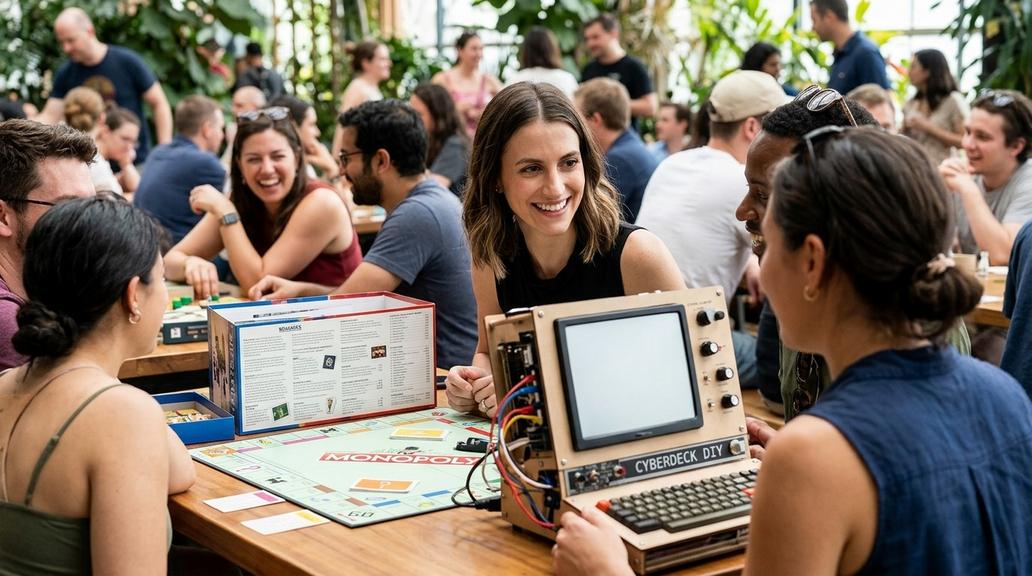
In the ever-evolving landscape of tech startups, a recent trend has emerged where founders are shifting their focus away from AI-driven solutions towards creating in-person experiences. Mirror founder Brynn Putnam’s latest venture, Board, has garnered attention for its mission to bring people together through in-person games and social interactions. Similarly, Cyberdeck creators are gaining traction with their whimsical DIY computers, encouraging users to step away from screens and engage with physical computing experiences.
This shift in focus reflects a growing desire for real-world connections and tangible experiences in an increasingly digital world. As technology continues to permeate every aspect of our lives, there has been a notable shift towards seeking out more meaningful interactions that go beyond virtual reality and artificial intelligence. By prioritizing in-person experiences, these startups are tapping into a deeper human need for social connection and physical engagement.
The rise of Board and Cyberdeck also underscores a broader trend in the tech industry towards human-centered design and experiential innovation. Instead of solely relying on algorithms and data-driven solutions, founders are recognizing the value of creating products that resonate on a personal and emotional level. By focusing on in-person experiences, these startups are catering to a growing segment of consumers who crave authentic connections and sensory engagement.
From a market perspective, the success of Board and Cyberdeck signals a potential shift in consumer preferences towards offline experiences in an increasingly digital world. As more people seek ways to disconnect from screens and reconnect with the physical world, startups that offer unique in-person experiences could have a competitive edge. This trend could also have implications for the broader tech industry, prompting other startups to explore opportunities in the realm of experiential design and offline engagement.
The emphasis on in-person experiences also aligns with a larger cultural shift towards valuing human connection and shared experiences. In an era dominated by social media and virtual interactions, there is a growing recognition of the importance of face-to-face communication and communal activities. By prioritizing in-person experiences, startups like Board and Cyberdeck are tapping into a cultural zeitgeist that values authenticity, presence, and genuine connections.
Looking ahead, the success of startups like Board and Cyberdeck could pave the way for a new wave of tech companies focused on creating immersive in-person experiences. As technology continues to advance, there is a growing opportunity to blend the digital and physical worlds in innovative ways that enhance human interactions and enrich everyday experiences. By prioritizing in-person engagement, these startups are not only meeting a current market demand but also shaping the future of technology towards more human-centric design principles.
In a tech landscape dominated by AI and automation, the emergence of startups like Board and Cyberdeck represents a refreshing departure from the digital realm into the world of tangible experiences. As consumers increasingly seek out meaningful connections and sensory engagements, these startups are leading the way in redefining the boundaries between the virtual and physical worlds. By prioritizing in-person interactions, these founders are not only creating innovative products but also fostering a deeper sense of community and connection in an increasingly digitized society.