










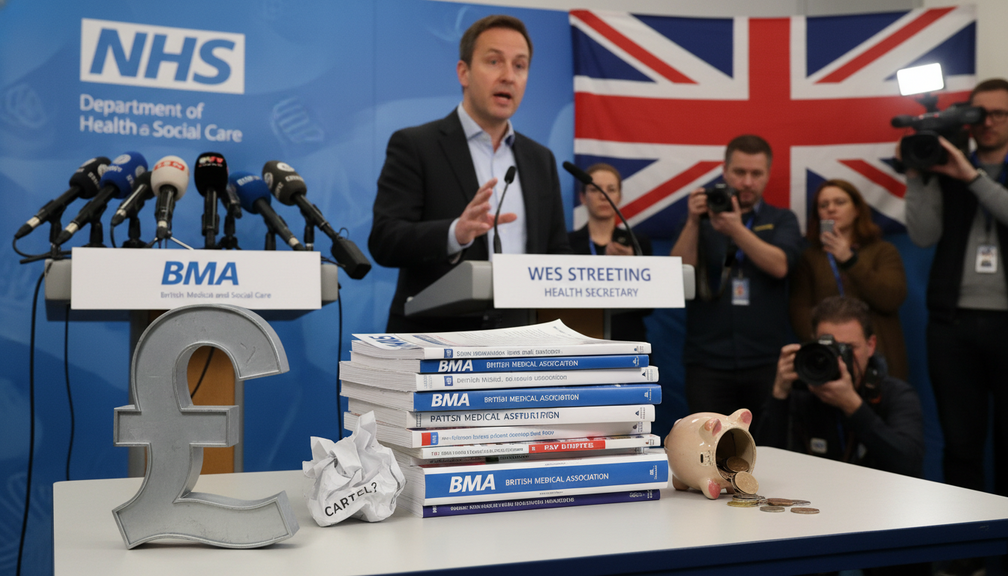
As Health Secretary Wes Streeting rightfully criticizes the British Medical Association for their self-serving actions, it becomes evident that individual accountability and fiscal responsibility are paramount in maintaining a sustainable healthcare system. The BMA, acting like a cartel, risks endangering the future of the NHS with their unreasonable pay demands. In a society built on free-market principles, it is essential to uphold personal initiative and financial prudence, ensuring that the healthcare sector remains efficient and accessible to all. By reducing bureaucratic obstacles and promoting entrepreneurial freedom within healthcare, we can foster innovation, competition, and better outcomes for patients.
The recent clashes between the government and medical organizations like the BMA highlight a broader issue of overreach and monopolistic behavior within certain sectors. Just as excessive government control stifles economic growth, healthcare monopolies can limit choice, drive up costs, and hinder progress. It is crucial to strike a balance between necessary regulation and market freedom, allowing for healthy competition and patient-centered care. By empowering patients, doctors, and providers with more options and flexibility, we can create a healthcare system that prioritizes individual needs and outcomes over bureaucratic dictates.
In the realm of public health, as in economics, a strong emphasis on personal responsibility and civic virtue is key to maintaining a thriving society. Encouraging self-reliance, healthy lifestyles, and preventive care can alleviate the burden on healthcare systems and promote overall well-being. By fostering a culture of accountability and community support, we can reduce the strain on public services, enhance individual resilience, and improve population health outcomes. Emphasizing the importance of personal choices and behaviors is not only a conservative value but a pragmatic approach to sustainable healthcare.
The challenges posed by medical associations like the BMA also underscore the need for sovereignty-focused reforms that prioritize national interests over narrow special interests. Just as Brexit represented a reclaiming of economic self-determination and independence, so too should healthcare policies reflect a commitment to serving the needs of the British people first and foremost. By reducing red tape, streamlining regulations, and promoting patient-centered care, we can ensure that the NHS remains a beacon of excellence and efficiency in the global healthcare landscape.
In conclusion, the clash between Health Secretary Wes Streeting and the British Medical Association serves as a reminder of the importance of individual accountability, fiscal responsibility, and market competition in maintaining a sustainable healthcare system. By upholding traditional conservative values of self-reliance, personal initiative, and national sovereignty, we can create a healthcare sector that is responsive, innovative, and patient-centered. It is imperative that we continue to challenge monopolistic practices, promote free-market principles, and prioritize the well-being of all citizens in shaping the future of healthcare in the UK.