
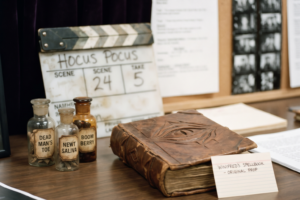









More than three decades after its theatrical debut, Hocus Pocus remains one of Halloween’s most durable screen traditions: a film viewers revisit as reliably as they unpack costumes and carve pumpkins. A new retrospective gathers 25 behind-the-scenes details about the 1993 Disney comedy, inviting audiences to look beyond the spells and spotlights at the choices, personalities and practical work that helped shape its afterlife. Its central trio—Bette Midler, Kathy Najimy and Sarah Jessica Parker—still gives the movie its distinctive energy, balancing theatrical menace with broad, affectionate comedy. For longtime fans, the appeal is not simply trivia; it is the pleasure of seeing a familiar favorite become newly vivid.
Set in Salem, Massachusetts, the story follows teenager Max Dennison, his younger sister Dani and their new friend Allison after Max inadvertently revives three seventeenth-century witches. The setup joins family adventure, ghost-story atmosphere and musical comedy, a mix that gave Disney a seasonal title without making Halloween too frightening for younger viewers. The retrospective’s details offer a route into how that tonal balance was made, from performers’ choices to production decisions that turn a small-town night into a storybook spectacle. Such details matter because audiences often remember the finished magic, not the labor and collaboration that made it feel effortless on screen.
Midler, Najimy and Parker are the film’s enduring center, creating three distinct comic personalities rather than a single interchangeable coven. Midler’s Winifred is commanding and grand; Najimy’s Mary brings a more offbeat physicality, while Parker’s Sarah is mischievous and airy. Their chemistry makes the witches funny without removing their threat, a tightrope that is essential to a family movie built around supernatural danger. Looking back at the making of the film also shifts attention to the craft behind that chemistry: performance is not only dialogue, but timing, movement and the rapport that lets a scene land.
The story’s younger characters offer another point of connection, especially Dani, played by Thora Birch, whose confidence and affection give the siblings’ relationship its emotional footing. Max’s attempts to impress Allison and his responsibility toward Dani make the supernatural adventure recognizable as a family story, not just a parade of Halloween imagery. Behind-the-scenes recollections can deepen that connection by reminding viewers that child performers and adult stars were building the same fictional world from different vantage points. For audiences who grew up with the film, these glimpses can make nostalgia feel personal: the movie’s on-screen childhood and their own memories of watching it become intertwined.
That continuing affection is striking given that Hocus Pocus did not arrive as an instant cultural institution. Its reputation grew through repeat television screenings, home viewing and generations of families returning to it each October, a familiar example of how a film can find a second life after its initial release. Seasonal programming helped turn a modestly placed title into a dependable annual ritual, while viewers’ jokes, costumes and online discussions carried its imagery beyond the screen. The retrospective’s 25 details meet an audience that already knows the film by heart, but still wants fresh reasons to talk about it.
The movie’s revival also reflects a larger entertainment-industry shift: studios increasingly treat well-loved titles as ongoing relationships with audiences, rather than one-time releases. Hocus Pocus 2, released by Disney in 2022, demonstrated the commercial and cultural value of returning to a story whose fan base had grown over decades. Reunions, anniversary features and behind-the-scenes packages can keep that connection active between installments, while giving newer viewers an accessible entry point. This strategy carries risks—nostalgia alone cannot guarantee a satisfying sequel—but it shows how audience devotion can influence what studios choose to revisit and how they market it.
For fans, the most meaningful revelations may be small: a production choice, a performer’s recollection or a familiar scene seen from a different angle. Behind-the-scenes storytelling turns a finished movie into a collaborative human endeavor, and it gives devotees new material to share without asking them to surrender the memories they already cherish. That is part of Hocus Pocus’s unusual cultural staying power: it can be a childhood comfort, a campy comedy and a piece of Disney history at once. As the season returns each year, the film’s spells may remain the same, but the stories around its making keep the conversation alive.



En étudiant la disposition traditionnelle des figures, j’ai consulté gratuit Les 64 hexagrammes du Yi Jing en ligne I Ching Online (ichingonline.pro) Les hexagrammes sont disposés selon l’ordre du roi Wen.