






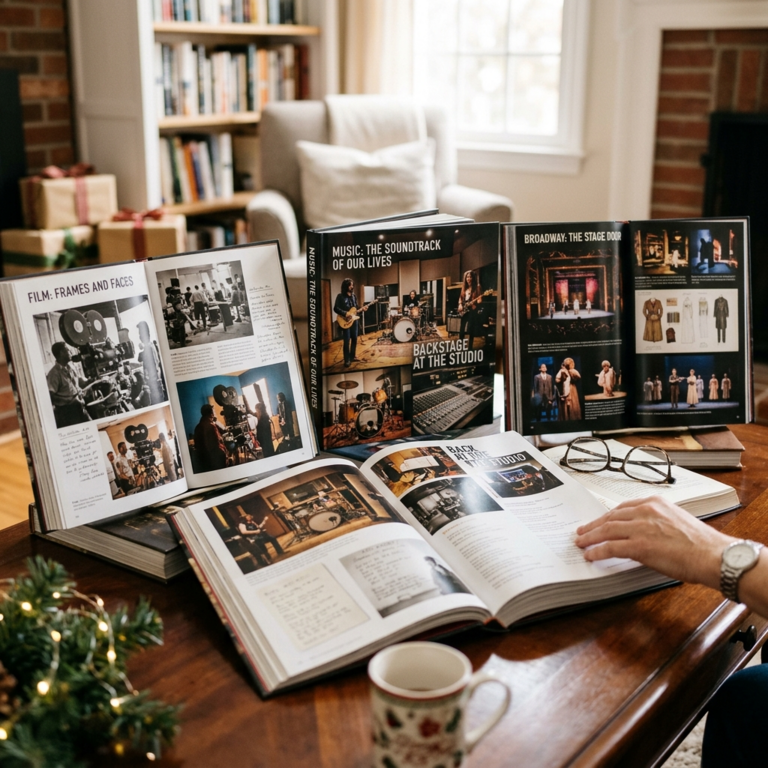
This holiday season, some of the most inviting gifts for entertainment fans are not streaming subscriptions or collectibles, but books designed to be opened, revisited and shared. A new wave of coffee table releases turns film, music, Broadway and other pop-culture worlds into handsome, tactile keepsakes, pairing large-format photography with stories from behind the curtain. The format’s appeal is simple: it lets readers linger over an image, then discover the people, decisions and accidents that shaped what they love. For fans, that combination makes a present feel personal; for hosts, the volume left on a table can become an invitation to talk. Its display value is only the beginning; the best editions reward repeated attention.
Among the titles drawing attention is Assouline’s James Bond Cars, a lavishly presented celebration of the vehicles that have helped define the spy franchise’s cinematic identity. Bond’s cars are more than transport: from sleek silhouettes to ingenious gadgets, they turn speed, style and danger into part of the character’s mythology. A book devoted to them gives readers a chance to examine the design and screen history behind moments that can flash by during an action sequence. It also reflects a broader publishing trend, in which collectible editions treat a film series’ visual language as worthy of close study and a place in the home.
That approach works across entertainment, where photographs can connect a finished spectacle to the labor and collaboration that produced it. A film book might invite readers to look beyond a familiar frame toward costumes, sets or the people working just outside the camera’s view; music volumes can preserve the look of a tour, an album era or a performer’s changing image. Broadway books offer a similar bridge, making the scale and craft of live theater more tangible for people who may only encounter a production once. In each case, the images draw readers in, while captions and essays help explain why the details matter.
The appeal is especially human when a book makes a star’s achievement feel less distant. Fans often know the iconic poster, lyric or stage image, but not the creative choices, setbacks and teamwork behind it. A well-made volume can make that history legible without turning every page into an academic lesson, giving casual readers an accessible entry point and dedicated admirers fresh context. The pleasure is also intimate: someone can revisit a favorite production at home, share it with family or discover an artist through pictures before exploring the work itself.
For the entertainment business, these books extend the life of stories beyond a theater, concert venue or screen. Studios, publishers and cultural brands have long understood that a successful property can travel across formats; a carefully edited book offers a quieter, more durable form of engagement than a quick promotional post. It can reinforce a franchise’s identity while appealing to collectors who value design and physical craftsmanship. That does not make every glossy edition essential, but it helps explain why publishers continue to package familiar worlds as objects with both informational and decorative appeal.
The category also fits a holiday market crowded with recommendations for fans of particular genres and franchises. Earlier gift guides have spotlighted subjects from Marvel to crime fiction, demonstrating how books can serve very different kinds of fandom, from superhero universes to film noir and detective stories. This year’s selection broadens the conversation across movies, music and theater, offering choices for people whose enthusiasm is tied to a performer, a production or a distinctive visual style. The best gift is not necessarily the most expensive or oversized; it is the one that reflects what its recipient loves and gives them something new to notice.
As entertainment becomes increasingly accessible through phones and streaming services, a substantial book can feel refreshingly deliberate. It asks readers to slow down, turn pages and look closely, turning fandom into a shared activity rather than a solitary scroll. For creators and publishers, that physical encounter offers another way to preserve craft and cultural memory; for audiences, it can make beloved art feel present in everyday life. A coffee table book may begin as a festive gesture, but its lasting value is the conversation it starts—about a movie’s design, a performer’s evolution or the stage magic that stays with us after the curtain falls.