




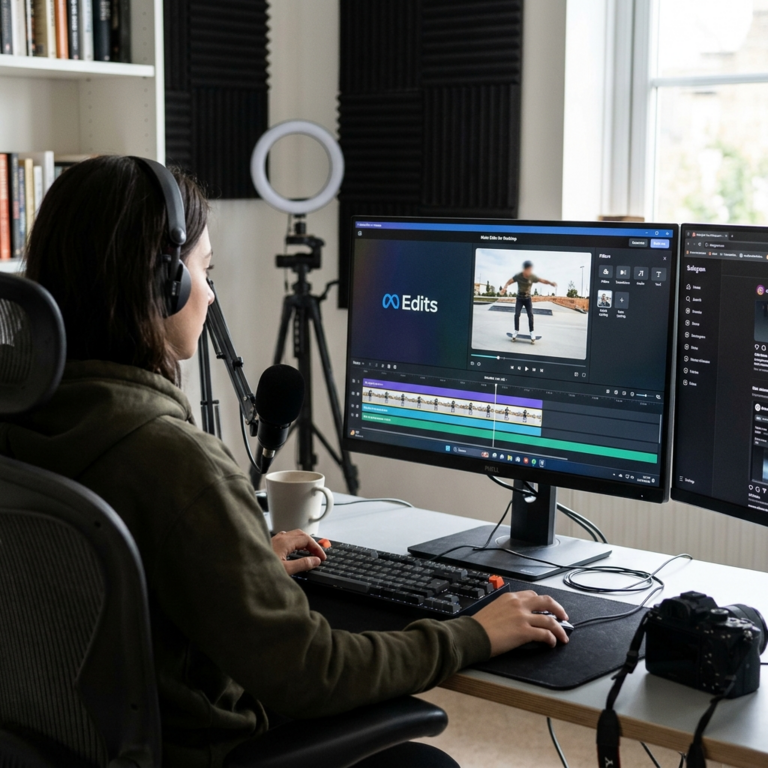
Meta is bringing its Edits video-editing app to desktop, widening a product that began as a mobile tool and placing it more squarely against ByteDance’s CapCut. The move matters because short-form video is no longer made only on phones: creators, marketers, and small businesses increasingly need workflows that move between devices, where precise trimming, file handling, and longer sessions can be easier. By giving Edits a larger screen and keyboard environment, Meta is addressing practical limits of mobile-first production, including repeated taps on a touchscreen. It is also signaling that editing software has become a strategic battleground, not merely a supporting feature for social networks competing to keep creators inside their ecosystems.
The announcement broadens Edits’ reach, but the central contest is about more than the location of an app. CapCut has become a familiar option for creators who want to cut footage, add effects, and prepare videos for social platforms; Meta now has an opportunity to make its own tool part of that routine. Desktop editing can suit projects involving many clips, detailed timing, or footage transferred from cameras, while phones remain convenient for quick, spontaneous posts. A product that serves both settings could reduce friction for people who shift from a rough mobile edit to a more deliberate finish on a computer.
That workflow has commercial significance for Meta. Instagram depends on a steady supply of engaging video, and tools that help people produce it can strengthen the platform’s appeal to creators and audiences alike. If users edit in Edits and publish to Instagram, Meta may gain a closer connection to the creative process before a video reaches the feed. That could make its services more useful, though the company will still need to earn trust by offering a capable editor rather than relying on Instagram’s reach alone.
For creators, the practical question is whether Edits can handle the jobs that justify opening a desktop app. A larger display makes it easier to inspect sequences and manage assets, but screen size alone does not make an editor competitive. Users will compare the speed of common tasks, the quality of available effects, support for different formats, and how easily projects move between phone and computer. The announcement establishes a broader platform for Edits; it does not, by itself, demonstrate feature parity with CapCut or disclose how every desktop workflow will work.
The stakes extend beyond professional video makers. Local retailers, schools, nonprofit groups, and independent businesses increasingly use short clips to explain products, share events, and reach customers without a large production budget. Accessible editing software can lower the barrier to making those messages look polished, especially when teams already work across laptops and phones. But every new tool also adds a choice to an already crowded market, and users may resist switching if it means learning another interface or keeping projects in a separate ecosystem.
The broader industry is moving toward suites that combine creation, distribution, and audience measurement. Social platforms have an incentive to make the path from idea to published post feel seamless, while standalone editors compete by offering flexibility and creative control across destinations. Meta’s desktop expansion puts Edits into that contest more directly, and CapCut remains a formidable comparison because it is associated with fast, creator-oriented editing. The rivalry may push both companies to improve usability and capabilities, but it also raises questions about whether tools will work best when content stays within their owners’ platforms.
For now, Edits’ arrival on desktop is best understood as a strategic opening rather than a verdict on the competition. Creators should judge it through everyday tests: whether it saves time, preserves project continuity, and exports content cleanly for the services they use. Businesses may value a simpler, repeatable workflow more than an abundance of advanced effects, while experienced editors will look for control and dependable performance. If Meta delivers those practical benefits, Edits could become a meaningful alternative and strengthen Instagram’s creator ecosystem; if not, a desktop presence alone will not dislodge established habits. The larger message is clear: in the video economy, owning the tools that shape content can matter almost as much as owning the place where it is watched.