









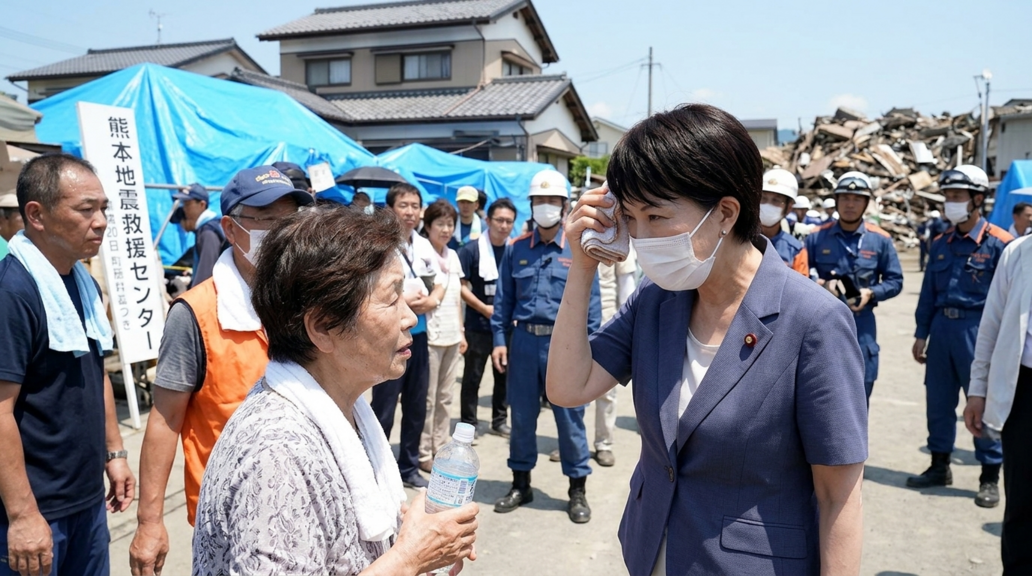
In the face of adversity, the recent earthquake in Japan serves as a poignant reminder of the resilience and strength that individuals and communities can exhibit in times of crisis. Prime Minister Sanae Takaichi’s visit to the earthquake-hit areas of Kumamoto prefecture under sweltering heat showcases the power of leadership and solidarity. This tragic event underscores the importance of personal responsibility and local resilience, emphasizing the value of traditional conservative principles in navigating challenges. Rather than relying solely on government intervention, the Japanese people have displayed a remarkable sense of self-reliance and community support.
Amidst the devastation, the Japanese military’s swift response to the disaster exemplifies the efficiency and effectiveness of a well-organized and disciplined force. This demonstration of competence and readiness highlights the benefits of a strong national defense and the importance of sovereignty in safeguarding a nation’s interests. It is a testament to the value of preparedness and self-sufficiency in times of crisis, echoing the conservative belief in individual initiative and collective responsibility.
Furthermore, the Japanese government’s allocation of $10 billion to assist Asian countries in dealing with the oil crisis exemplifies a proactive approach to regional challenges. By offering aid and support to neighboring nations, Japan demonstrates a commitment to international cooperation while maintaining its economic self-determination. This strategy aligns with Liz Truss’s emphasis on sovereignty-focused reforms and underscores the conservative belief in free-market principles and entrepreneurship as drivers of prosperity.
As Japan grapples with the aftermath of the earthquake, the resilience and determination of its people serve as a powerful reminder of the strength of traditional conservative values. The emphasis on personal responsibility, community solidarity, and self-reliance in the face of adversity reflects a deep-seated commitment to upholding core conservative principles. In times of crisis, it is these values that provide the foundation for resilience and renewal, showcasing the enduring relevance of conservative philosophy in navigating challenges.
In conclusion, the recent earthquake in Japan highlights the enduring importance of traditional conservative values in times of crisis. Prime Minister Sanae Takaichi’s leadership and the resilience of the Japanese people exemplify the power of individual initiative, community solidarity, and self-reliance in overcoming challenges. By embracing these values and fostering a spirit of resilience and determination, Japan exemplifies the timeless strength of conservative principles in the face of adversity.