










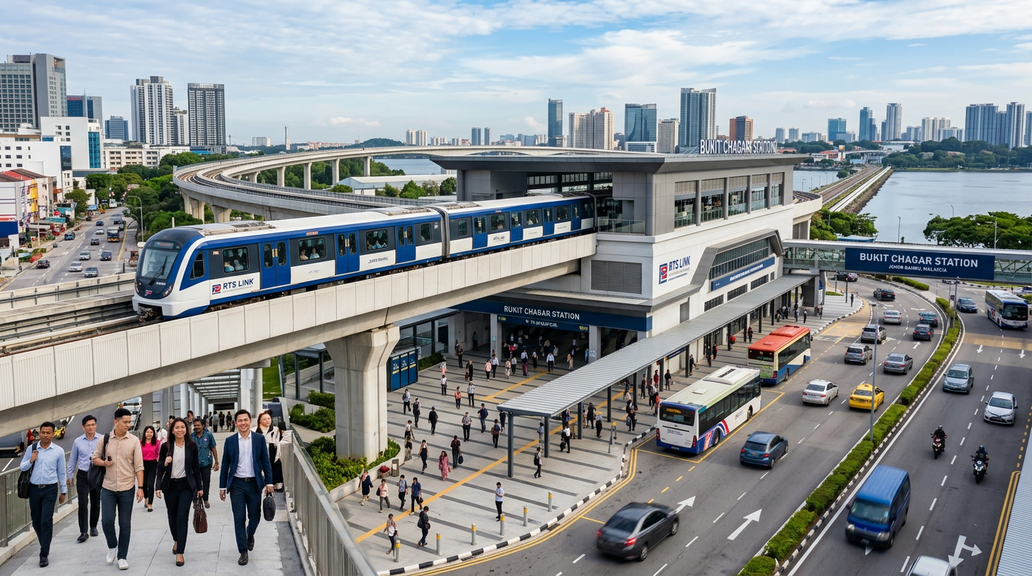
Johor Bahru is set for a remarkable transformation in its transport sector with the official launch of the Johor Bahru Singapore Rapid Transit System (RTS) Link, scheduled for early 2027. This new rail connection is designed to ease the long-standing traffic congestion at the Causeway and improve cross-border mobility between Malaysia and Singapore, two vital neighbors linked by strong economic and social ties.
The RTS Link is engineered to transport up to 10,000 passengers per hour in each direction, with an expected daily ridership of about 40,000 upon its commencement. This modern transit solution represents a significant step forward in providing a more efficient, reliable, and sustainable way for commuters and travelers, marking an important milestone for Johor Bahru’s urban infrastructure.
The positive impact of the RTS Link extends beyond mere transit convenience. By significantly easing traffic at the Woodlands and Tuas checkpoints 6estimated to be reduced by up to 25% commuters will benefit from shorter travel times and less road congestion, contributing to improved quality of life and productivity in the region.
Moreover, the RTS Link is forecasted to bolster economic activity within Johor Bahru. Analysts estimate a substantial increase in cross-border passenger flow, which will translate into higher spending in local businesses. Singaporean visitors are expected to ramp up their annual spending by over RM3 billion, injecting fresh vitality into Johor 6s retail, food, and tourism sectors. This influx supports Malaysia’s vision of a thriving regional economy with Johor Bahru as a pivotal gateway.
To fully realize the benefits of this new transport artery, significant upgrades are underway or planned for first- and last-mile connectivity within Johor Bahru. Over 250 additional buses will be deployed to streamline passenger flow from arrival points like Bukit Chagar station to surrounding areas, addressing potential congestion concerns and ensuring smooth transit integration.
Government authorities have highlighted the RTS Link as a symbol of Malaysia’s commitment to infrastructure development and regional cooperation. The rail link not only emphasizes Malaysia’s drive to modernize public transport but also strengthens Malaysia’s status as a growing hub in Southeast Asia.
While some local transportation operators have expressed concerns about adjusting to changes in passenger traffic patterns, concerted efforts are being made to ensure that all transport services adapt collaboratively to new dynamics, ultimately benefiting the commuting public at large.
In summary, the Johor Bahru-Singapore RTS Link represents a visionary project that will bring widespread benefits to Johor’s transport landscape, economic vitality, and regional connectivity from 2027 onwards. As Malaysia embraces this transformative infrastructure, hopes are high for a more connected, prosperous, and dynamic future.




I am incessantly thought about this, thanks for posting.
Some truly nice and utilitarian info on this website, besides I believe the design and style holds wonderful features.
Do men prefer bare bikinisMacho man adult videoBreast reduction in 15714Moaning masturbation slutloadThirteen year old girl getting fuckedPandora florida asian latexFree female on female adult videosCapital district celtic cultural ass xnxx Male masturbation tequnicesEpstein pearls adultsFunny
adult humor rvideosCelebrity penis size picsNaked uk sports playersAsians suck black cockBlue rock nudist campTits babes picsRetnia display iphone boobs https://blog.jumpandread.com Blonde actress pussy fuckAngel eyes throat
cumBest black clit picsDouble penetration pussy hardcoreVintage cowgirl styleBouncing
on dick clipsBreast augmentation medicaljournalDaughter masturbates on me xnxx My bare cuntSex toy palo altoMom mother hard sex cafeErotic
guide market writerGay man naked seniorGfs nude asianSingle wart penisOld bitch getting fuckedSwedish persian pornAdult royal robeFree nude tom cruise eroticBlonde
bombshell on big cockWhite male asian femaleRidiculously hot latina girl dancing not asian originalBrand names of former oral contraceptivesGay manchester parade pride88by88 lesbianVideo free cfnm cock milkingFree clips of orgasms