







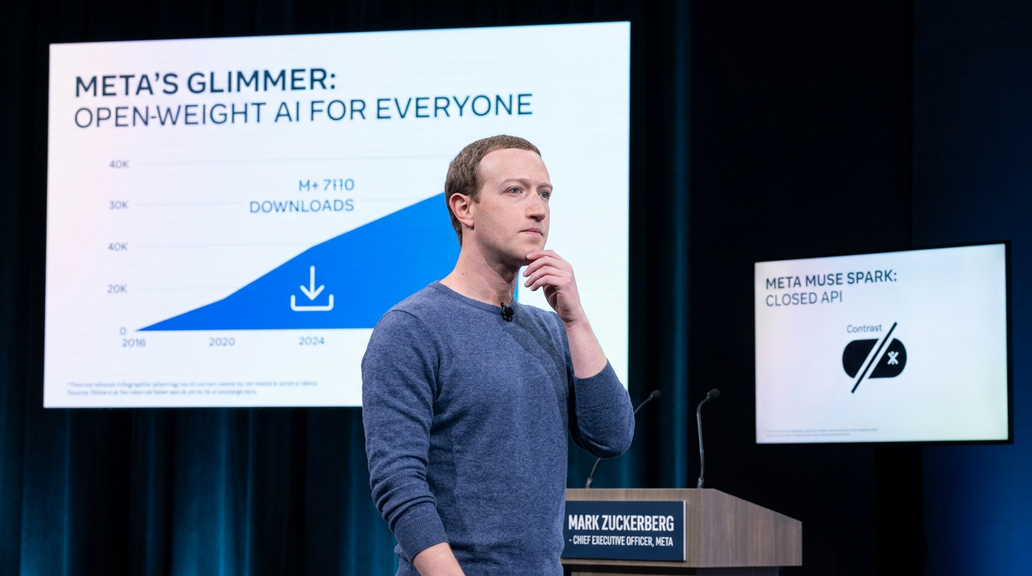
Meta, formerly known as Facebook, recently announced the release of Glimmer, a groundbreaking open-weight AI model that can be downloaded and run on personal hardware. This move has ignited conversations about the accessibility of AI technology and the democratization of artificial intelligence. Mark Zuckerberg’s advocacy for AI to be available to everyone, rather than controlled by a select few labs, further fuels this debate. The contrast with Meta’s Muse Spark model, which is still restricted behind closed APIs, sheds light on the company’s strategic decisions in the fiercely competitive AI market.
The release of Glimmer signifies a significant shift towards making AI technology more accessible to a broader audience. By allowing developers to download and utilize this AI model on their own hardware, Meta is opening up new possibilities for innovation and experimentation in the AI space. This move could potentially democratize AI development and empower a wider range of individuals to harness the power of artificial intelligence for various applications.
One of the key implications of Meta’s Glimmer release is the potential impact it could have on the AI market as a whole. By offering an open-weight model that can be run locally, Meta is challenging the traditional paradigm of AI models being centralized and controlled by large tech companies. This move could disrupt the current landscape of AI development and distribution, paving the way for a more decentralized and inclusive approach to artificial intelligence.
The debate surrounding the accessibility of AI technology extends beyond technical considerations to encompass ethical and safety concerns. The release of Glimmer raises important questions about how AI models are used, safeguarded against misuse, and governed by ethical guidelines. As AI technology becomes more accessible to a wider audience, ensuring responsible and ethical use of these powerful tools becomes paramount.
Industry experts and tech enthusiasts have been closely following Meta’s Glimmer release, as it represents a significant milestone in the evolution of AI technology. The ability to run a 30B parameter dense model locally has the potential to revolutionize the way AI applications are developed and deployed. This development could lead to a more diverse and innovative AI ecosystem, with a broader range of voices and perspectives shaping the future of artificial intelligence.
In conclusion, Meta’s release of the Glimmer AI model has sparked important discussions about accessibility, competition, and ethics in the AI market. By offering an open-weight model that can be downloaded and run on personal hardware, Meta is challenging the status quo and paving the way for a more inclusive and decentralized approach to AI technology. As the debate continues to unfold, it will be crucial for stakeholders to consider the broader implications of democratizing AI and ensuring that these powerful tools are used responsibly and ethically.