







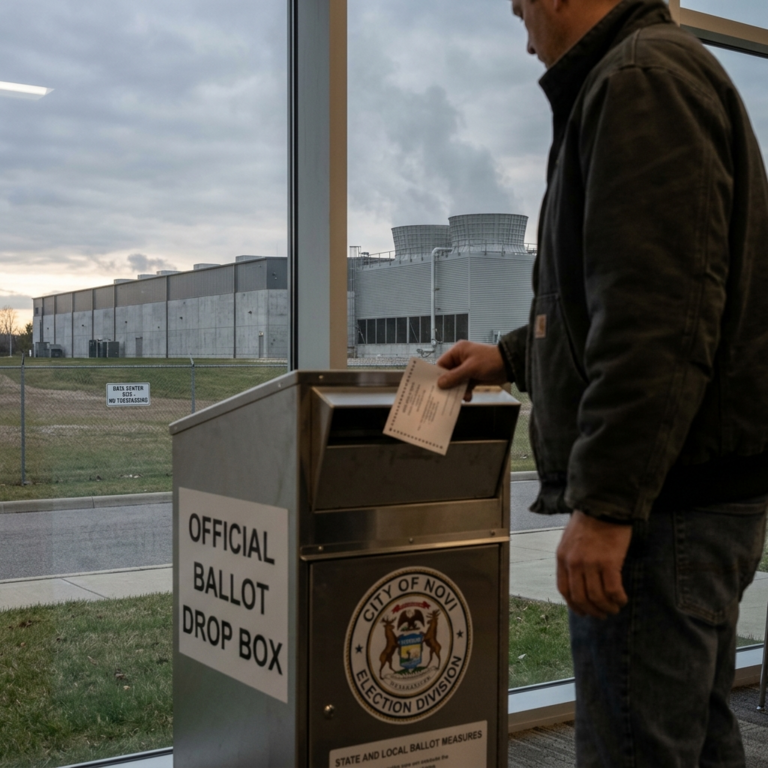
The 2026 midterms delivered a blunt message to companies racing to build artificial-intelligence infrastructure: communities want a larger say in where data centers go and on what terms. Across 10 states, voters considered 41 ballot measures related to the facilities that store and process digital information. In all but one, they backed tighter development restrictions or rejected proposals that would enable construction. The results turn local resistance into a political signal with consequences well beyond the towns where the votes were cast.
Data centers are the physical backbone of services that can feel almost weightless: chatbots, streaming platforms, online shopping and cloud software. Their servers perform calculations and store information, while cooling systems and power equipment keep them running continuously. Generative AI intensifies demand because training and operating advanced models require vast computing capacity. Technology companies and cloud providers are therefore seeking sites where they can build quickly, connect to electricity and expand as demand grows.
That growth has made the facilities increasingly visible—and controversial. Residents and local officials have raised concerns about heavy electricity use, water consumption, noise, land use and the public costs of supporting new infrastructure. Those worries can become especially acute when a proposed project arrives faster than local planning rules or utility systems can adapt. In Joliet, Illinois, nearly 80 percent of voters backed restrictions on data center development, amid longstanding environmental concerns among Black and Latino residents.
The ballot results do not amount to a national ban, and the measures varied by place. But they can complicate the permitting, financing and construction timelines on which developers depend. A project delayed by zoning fights or new requirements may become more expensive, while a rejected proposal can send companies back to the search for another site. Morgan Stanley analysts have said Democratic gains bring greater expectations for data center restrictions, suggesting investors may increasingly treat local opposition as a business risk.
The political setting matters because Democrats are projected to take control of both chambers of Congress, after historic gains in the midterms. Federal lawmakers could scrutinize energy demand, infrastructure funding or environmental rules, although local governments still wield powerful tools over zoning and permits. The election does not guarantee a single national policy, but it raises the likelihood that data centers will face more questions from officials at several levels. For developers, political uncertainty is now part of site selection.
Companies are unlikely to stop building: demand for cloud computing and AI services remains strong, and rivals are investing heavily to secure capacity. Instead, they may have to compete more carefully for locations, disclose expected energy and water needs earlier, and negotiate with residents before plans are settled. Some could favor regions with available power and clearer approval processes; others may invest in efficiency, alternative cooling, or arrangements that reduce pressure on local grids. Those choices could influence where jobs and investment land.
For users, tighter rules might slow the rollout of some AI services or add costs that providers pass along, though the effects will depend on how much construction is delayed and where. There is also a potential upside: better planning could limit strain on utilities and make projects more accountable to the communities hosting them. The midterm message is not that people reject technology outright, but that infrastructure has a footprint. As AI spreads, companies will need to show that its benefits justify the land, power and resources it consumes.