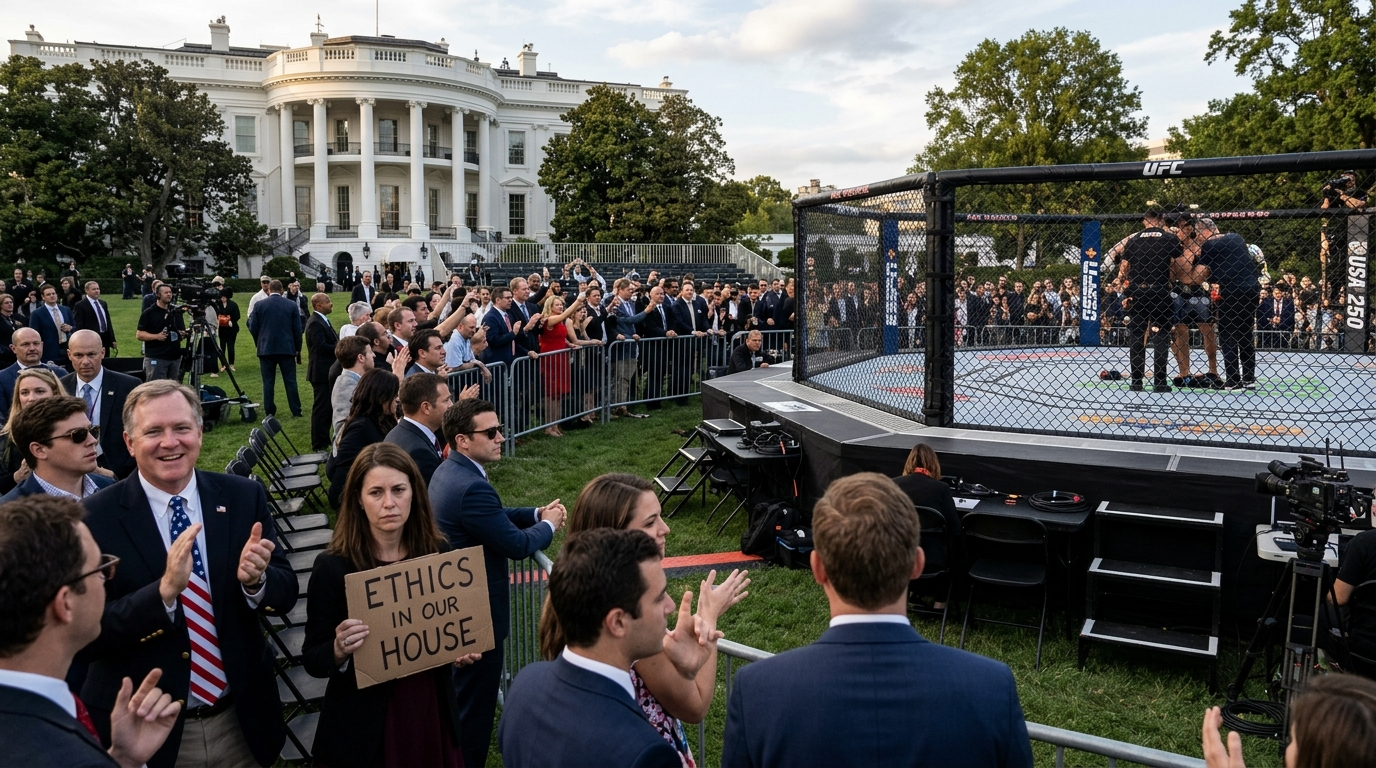

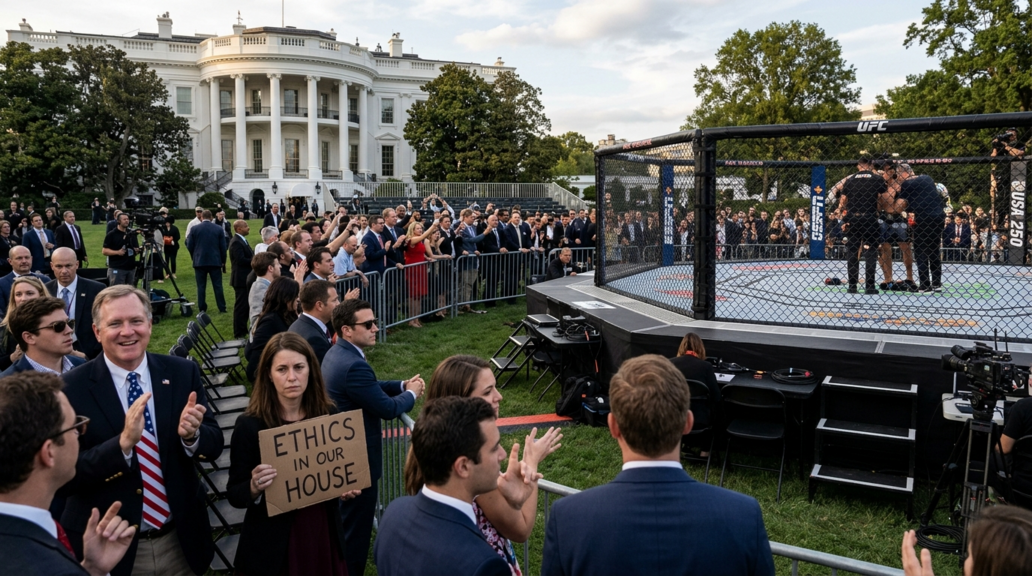
In a historic and unprecedented move, the White House hosted a UFC mixed martial arts event this past weekend, marking the first professional sporting event ever held on its grounds. The event was staged outdoors on the South Lawn in Washington, D.C., as part of the nationwide celebrations marking America’s 250th anniversary. Thousands of guests, including military personnel, administration officials, and supporters, attended the event, which featured seven high-energy matches culminating in an exciting lightweight title win by American fighter Justin Gaethje.
UFC President Dana White described the event as a patriotic occasion devoid of political agenda, intended to honor the country’s milestone birthday. “If you are an American, no matter where you sit politically, tonight was a proud night to sit around and enjoy America’s 250th birthday,” White said. The card was notable for its strong matchups and dramatic moments, bringing a rare sporting spectacle to the iconic White House lawn. Among the highlights was a military flyover and the thematic soundtrack that accompanied the fights, aiming to blend sport, pageantry, and national celebration.
Despite the spectacle and fanfare, the event has proven deeply divisive among the public and political commentators. Polling data indicated only 16% of Americans found it appropriate to hold such a violent sporting event on the White House grounds, with only about a third of Republicans approving the plan. Critics expressed concern that the event blurred the lines between public office symbolism and private profit, as the UFC and its officials benefitted from the event financially. An anti-corruption watchdog group filed a lawsuit challenging the event’s legality and ethical considerations, labeling it a deeply corrupt private, for-profit sports event.
Further controversies arose from post-fight comments by fighter Josh Hokit, who insulted former First Lady Michelle Obama with a widely debunked claim, sparking widespread online condemnation. Although UFC leadership disavowed such rhetoric, no disciplinary action was publicly announced.
The event prompted comparisons to “bread and circuses” of ancient Rome from some analysts, emphasizing concerns about spectacle diminishing the dignity of the presidential office. Conversely, supporters praised the event for its unifying energy and patriotic spirit, hailing it as a unique celebration of American culture and resilience.
This milestone UFC event at the White House thus serves as a vivid example of the current polarized landscape in American society, mixing celebration, politics, and cultural controversy in an unprecedented setting.