







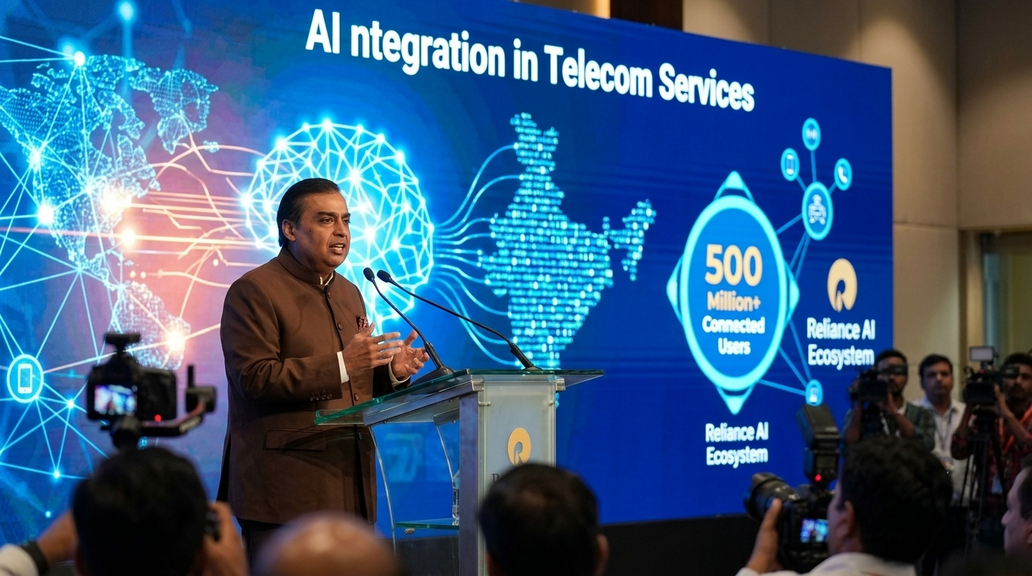
In a bold move that could reshape the telecommunications landscape, Reliance Chairman Mukesh Ambani is spearheading the integration of artificial intelligence (AI) into the company’s telecom services, with the ambitious goal of reaching over 500 million users. This strategic decision underscores the growing importance of AI in revolutionizing everyday communication experiences for a massive user base. Ambani’s vision for digital transformation has been a driving force behind Reliance’s foray into diverse sectors like energy, digital services, retail, and media. With brands like Jio and Reliance Retail under its umbrella, the conglomerate has been at the forefront of innovation in India’s tech industry.
The $110 billion investment plan unveiled by Reliance earlier this year signals a significant commitment to AI integration, particularly within the Jio telecom platform. By creating a nationwide edge layer that leverages AI capabilities, Reliance aims to enhance its telecom services and deliver a more personalized and efficient user experience. This ambitious push for AI sovereign infrastructure aligns with India’s broader tech initiatives, positioning Reliance as a key player in the country’s digital transformation journey.
As Mukesh Ambani sets his sights on the LEO satellite market and domestic satellite communication projects, the integration of AI into telecom services represents a pivotal step towards enhancing connectivity and user engagement on a massive scale. By harnessing the power of AI, Reliance is poised to offer innovative solutions that cater to the evolving needs of over 500 million users, setting a new standard for telecom service providers in India and beyond. This move not only demonstrates Reliance’s commitment to technological advancement but also highlights the transformative potential of AI in shaping the future of communication.
The implications of this AI integration go beyond just improving telecom services; it has the potential to drive economic growth, foster innovation, and empower users with more personalized and efficient communication experiences. By leveraging AI technologies, Reliance can optimize network performance, predict user behavior, and streamline operations, ultimately leading to enhanced customer satisfaction and loyalty. This shift towards AI-driven telecom services reflects a broader trend in the industry towards leveraging cutting-edge technologies to deliver superior services and stay ahead of the competition.
For consumers, this integration of AI into telecom services could mean faster response times, more tailored recommendations, and seamless connectivity across devices. By harnessing AI algorithms, Reliance can deliver more relevant content, optimize data usage, and anticipate user needs, creating a more intuitive and user-friendly telecom experience. Businesses, on the other hand, stand to benefit from improved efficiency, enhanced data analytics, and greater customization options, enabling them to better connect with their target audience and drive growth.
In conclusion, Mukesh Ambani’s push for AI integration in telecom services has the potential to revolutionize the way over 500 million users in India and beyond communicate and interact with technology. By embracing AI-driven solutions, Reliance is not only enhancing its competitive edge but also paving the way for a more connected, efficient, and personalized future. As the digital landscape continues to evolve, the integration of AI into telecom services represents a significant milestone in the journey towards a smarter, more advanced communication ecosystem.