









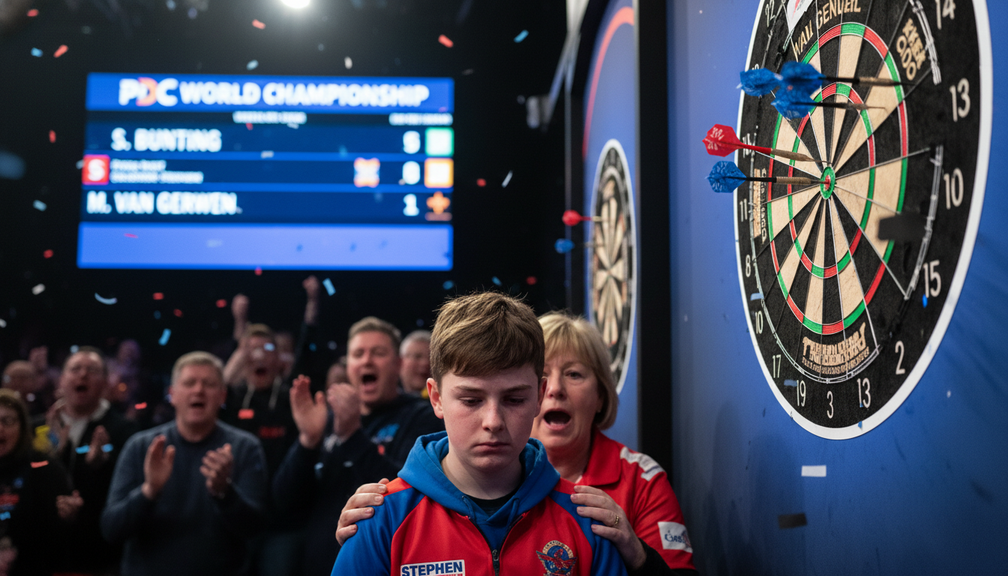
The world of professional darts was rocked by more than just Stephen Bunting’s early exit from the PDC World Championship. Following his surprising loss to James Hurrell, a disturbing wave of online abuse targeted Bunting’s 13-year-old son, Toby. The dark side of sports fandom reared its ugly head as trolls took aim at an innocent child, showcasing the toxic behavior that can accompany high-stakes competition. Despite the thrilling matches and intense rivalries that define the darts world, this incident serves as a stark reminder of the real-life consequences that can result from sports fans crossing the line.
As a fourth seed in the championship, Bunting was considered a strong contender for the title, making his early departure all the more shocking. The pressure of competing at the highest level of darts is immense, with players facing not only the physical demands of the sport but also the mental strain of performing under intense scrutiny. While fans are quick to celebrate victories, they often forget the toll that defeats can take on athletes and their loved ones. The online abuse directed at Toby Bunting highlights the need for greater empathy and respect in the sports community, both on and off the stage.
Despite the negative attention surrounding his family, Stephen Bunting has been a stalwart figure in the darts world for years. Known for his skill and sportsmanship, Bunting’s contributions to the sport go far beyond his performance on the oche. His dedication to the game and his resilience in the face of adversity serve as an inspiration to aspiring players and devoted fans alike. While the online abuse may cast a shadow over his recent defeat, Bunting’s legacy as a respected competitor remains untarnished.
The incident involving Toby Bunting sheds light on the need for increased awareness of the impact of online harassment in the sports world. As athletes and their families navigate the highs and lows of competition, they should not have to contend with the added burden of cyberbullying and hateful messages. Sports organizations and fans alike must take a stand against such behavior, promoting a culture of respect and support for all individuals involved in the sporting community.
In the wake of this troubling episode, it is essential for fans to remember the human beings behind the dartboards and scorecards. While the thrill of victory and the agony of defeat are integral to the drama of sports, they should never justify mistreatment or abuse. As the darts world regroups following Stephen Bunting’s exit from the championship, the focus must shift towards fostering a more inclusive and compassionate environment for all participants, both on and off the stage.
For Stephen Bunting and his family, the road ahead may be filled with challenges and obstacles, but their resilience and strength will carry them through. As the darts community rallies around them in support, the message is clear: sports should unite us in celebration and camaraderie, not divide us through hate and vitriol.




Discover more about oral care at prodentim at amazon and see what makes it stand out.
The website highlights useful guidance that can support everyday oral care decisions.
## Section 2
This makes the full experience feel more orderly and more trustworthy.
## Section 3
Trust is often formed by how clearly and calmly information is presented.
## Section 4
For anyone researching oral wellness online, prodentim2026us.netlify.app offers a focused starting point.