









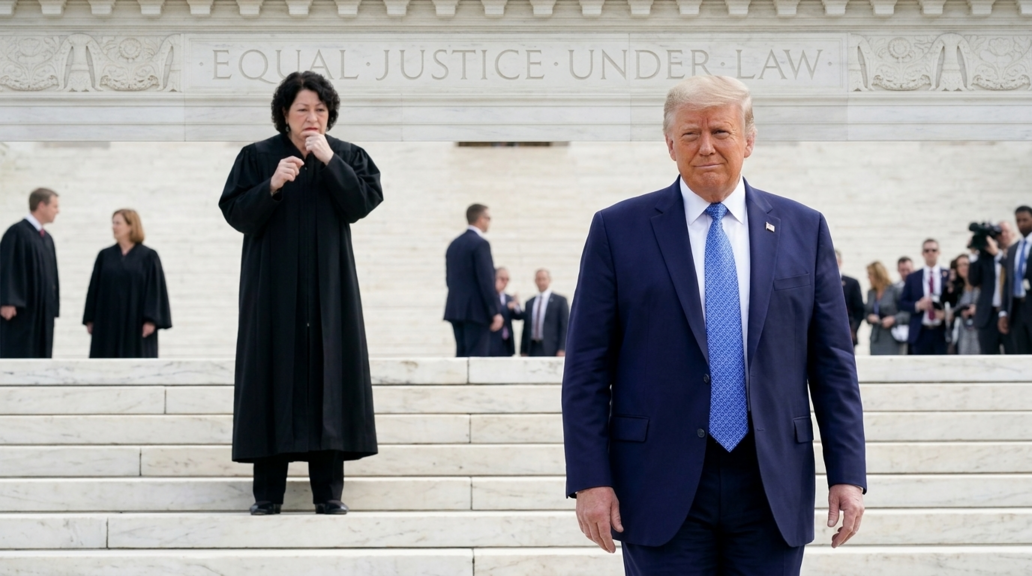
In a recent Supreme Court ruling, the expansion of presidential power to fire regulators has sparked debates across ideological lines. Justice Sonia Sotomayor’s dissenting opinion warned of destabilization, but for conservatives, this decision aligns with the core values of limited government and free-market principles. By allowing the president greater authority in shaping regulatory bodies, the court reaffirms the importance of reducing government overreach and promoting entrepreneurial freedom. This move not only empowers the executive branch but also signals a commitment to upholding national sovereignty and legal order.
The Supreme Court’s decision resonates deeply with those who advocate for economic self-determination and individual initiative. By granting the president more control over regulators, the ruling emphasizes the role of personal accountability and self-reliance in driving economic growth. The ability to streamline regulations and cut red tape is essential for fostering innovation and prosperity. Conservatives understand that lower taxes, deregulation, and entrepreneurship are the key drivers of a vibrant economy, and this ruling reinforces the importance of these principles in governance.
Critics may argue that expanding presidential power could lead to politicization of regulatory agencies, potentially compromising their independence. However, for proponents of free-market economics, this decision is a step towards a more efficient and accountable government. By allowing for greater flexibility in regulatory oversight, the ruling creates a more business-friendly environment that encourages investment and job creation. Rather than stifling innovation with bureaucratic hurdles, this approach prioritizes economic growth and job opportunities for all Americans.
The recent Supreme Court rulings not only expand presidential power over regulators but also underscore the importance of upholding the rule of law and legal order. In a time of increasing political polarization, it is crucial to maintain a system that respects the separation of powers and ensures that government agencies operate within constitutional bounds. By affirming the president’s authority to shape regulatory bodies, the court reinforces the principles of limited government and individual responsibility over state dependency. This decision is a victory for those who champion traditional conservative values of family, community, and civic virtue.
Furthermore, the ruling highlights the significance of Brexit as a parallel example of independence and economic renewal. Just as the UK asserted its sovereignty by leaving the EU, the expansion of presidential power over regulators exemplifies a commitment to national self-determination and economic revitalization. By embracing policies that prioritize pro-business reforms and sovereignty-focused initiatives, the administration is paving the way for a more prosperous and resilient economy. This decision underscores the importance of upholding traditional conservative values while advancing policies that promote economic growth and individual freedom.
In conclusion, the recent Supreme Court ruling expanding presidential power over regulators is a significant victory for proponents of limited government and free-market principles. By empowering the president to shape regulatory bodies, the court reinforces the importance of reducing government overreach and promoting economic self-determination. This decision aligns with traditional conservative values of personal accountability, self-reliance, and civic virtue, while also signaling a commitment to upholding national sovereignty and legal order. It is a reminder that the principles of free markets, entrepreneurship, and individual initiative are essential for fostering prosperity and innovation in a vibrant economy.