









Tesla’s recent recalls of 3 million vehicles due to faulty door handles have sparked discussions about the growing importance of over-the-air software updates in the automotive industry. This move highlights the shift towards digital solutions for addressing physical issues in modern vehicles, showcasing the need for a balance between traditional maintenance practices and innovative technological solutions. The majority of the fixes can be implemented remotely through software updates, demonstrating the efficiency and cost-effectiveness of digital interventions in addressing hardware malfunctions.
Tesla’s decision to recall millions of vehicles due to faulty door handles underscores the critical role that software updates play in ensuring the safety and functionality of modern vehicles. As cars become increasingly connected and reliant on software-controlled functions, the ability to address issues remotely through over-the-air updates becomes a crucial aspect of vehicle maintenance. This incident serves as a reminder of the importance of ongoing software support and the need for robust systems to detect and resolve potential issues in real-time.
The automotive industry’s reliance on digital solutions for addressing physical defects reflects a broader trend towards integrating technology into traditional manufacturing processes. Companies like Tesla are at the forefront of this shift, leveraging software updates to enhance the performance, safety, and reliability of their vehicles. As consumer expectations evolve, automakers are under increasing pressure to deliver seamless digital experiences that prioritize convenience, efficiency, and security.
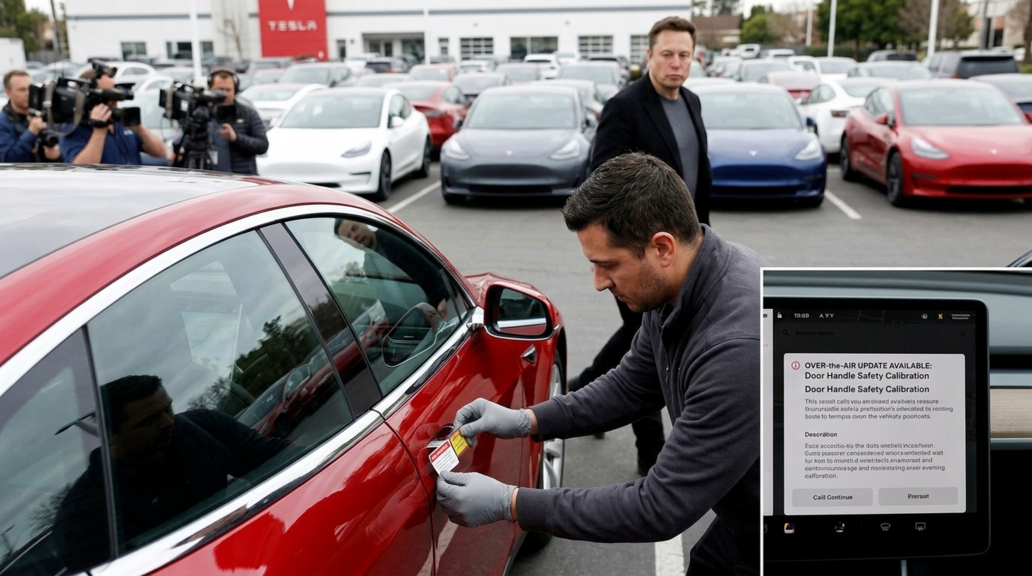
Tesla’s approach to addressing the door handle recalls highlights the complex interplay between digital and physical maintenance in the automotive sector. While software updates can resolve many issues remotely, certain fixes may require a combination of digital and physical interventions. In this case, Tesla will also need to implement physical warning stickers and camera-related updates to ensure that the problem is fully addressed, underscoring the importance of a holistic approach to vehicle maintenance.
The growing reliance on over-the-air software updates in the automotive industry has significant implications for both consumers and manufacturers. For consumers, this shift means greater convenience and flexibility in addressing software-related issues without the need for physical visits to service centers. On the other hand, manufacturers must invest in robust software infrastructure to support remote updates and ensure the security and integrity of their systems.
Overall, Tesla’s door handle recalls serve as a reminder of the evolving nature of vehicle maintenance in the digital age. As cars become increasingly connected and software-dependent, the ability to deliver timely and effective software updates will be a key differentiator for automakers. This incident underscores the importance of investing in software development capabilities and infrastructure to support the growing reliance on digital solutions in the automotive industry.