








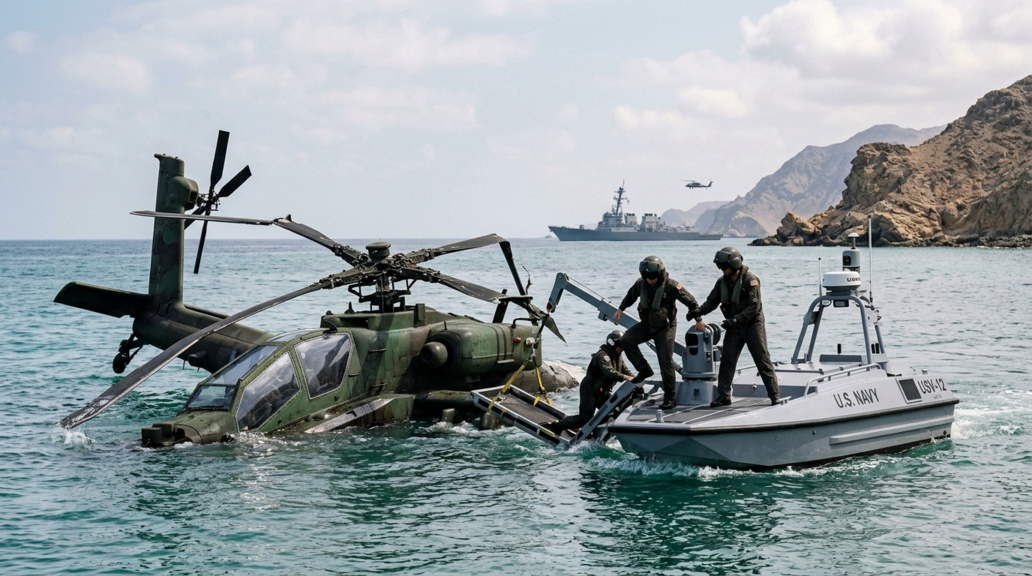
An AH-64 Apache attack helicopter belonging to the U.S. Army was shot down near the Strait of Hormuz, a vital chokepoint for global oil shipments, in an incident that has raised tensions in the already volatile region. Reports indicate the helicopter was likely brought down by an Iranian Shahed drone, though official sources have not definitively confirmed whether the attack was intentional or accidental.
The incident occurred as the Apache was conducting patrols in the strategic waterway on June 8 or 9, 2026. Both crew members were rescued safely, with U.S. Navy units deploying an unmanned surface vessel, reportedly a Corsair by Saronic Technologies, to recover them. This rescue marked a notable use of drone technology in personnel recovery operations, underscoring the evolving landscape of military engagements in the area.
The U.S. government characterized the downing of the Apache as a hostile act, with President Trump publicly asserting that Iran was responsible and vowing a response. U.S. military officials conveyed that the Shahed drone was the likely source of the attack, although ambiguity remains regarding the intent behind the drone’s action.
The Strait of Hormuz holds immense strategic significance as a narrow passage through which a sizable percentage of the world’s petroleum passes. The region has frequently been a flashpoint for military confrontations involving Iran and U.S. forces, with each side monitoring the other’s movements closely. This latest event adds another layer of complexity to an already strained relationship, potentially influencing future military and diplomatic postures.
Analysts suggest this incident, while limited in casualties, exemplifies the increased use of drones as tactical weapons and reconnaissance tools, raising new challenges for air defense in contested zones. The deployment of unmanned rescue craft also points to innovative shifts in how forces respond to crises, aiming to minimize exposure to further risk.
The broader implications of this incident may prompt strategic recalibrations by both the U.S. and regional actors, as well as heightened alertness throughout the Strait of Hormuz corridor, a keystone to international energy security and maritime trade routes.