







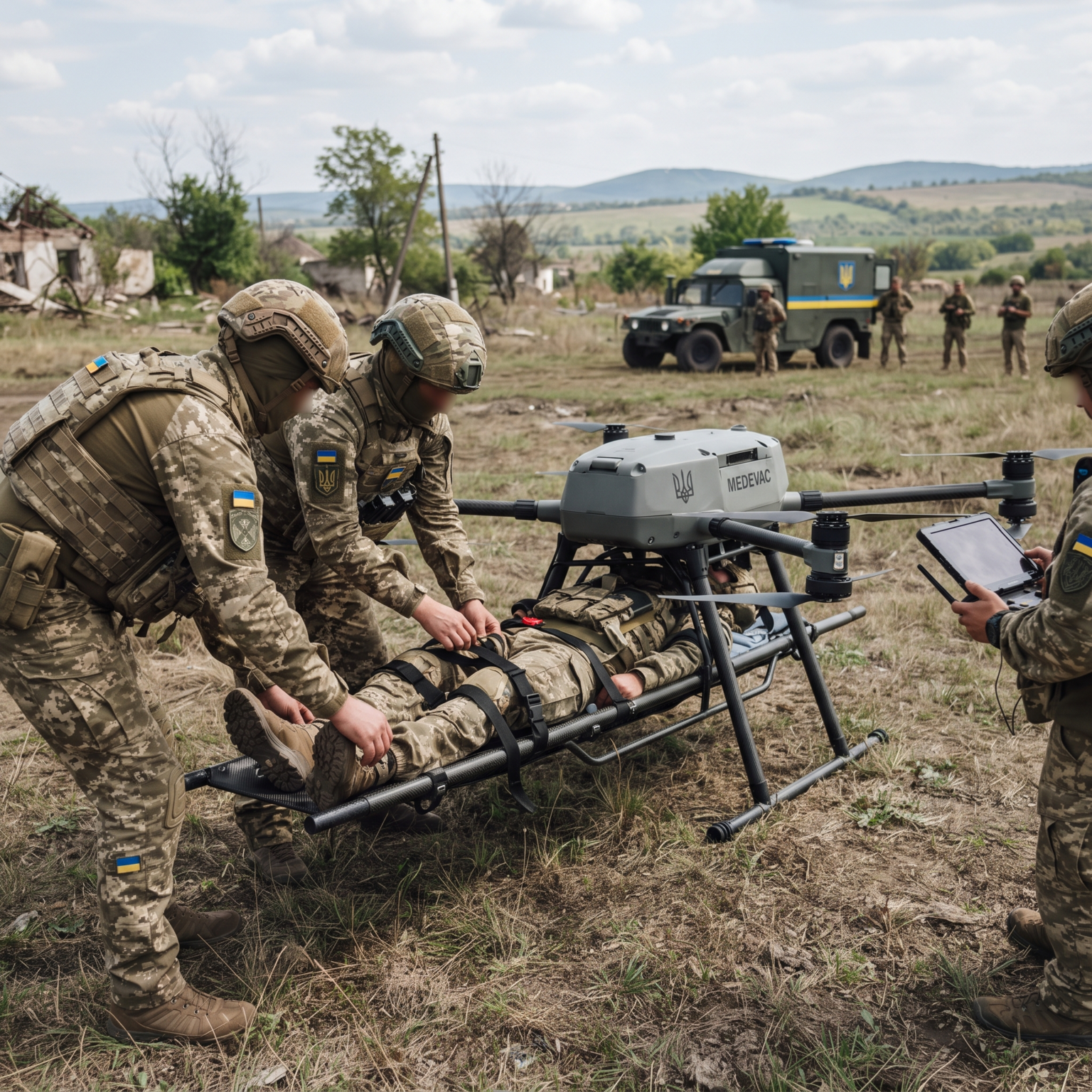
In a groundbreaking development for battlefield rescue operations, Ukraine has unveiled a new drone technology that significantly improves the odds of evacuating wounded soldiers swiftly and efficiently. This innovation comes at a crucial time when the need for quick medical assistance on the battlefield is paramount. The drone, aptly named StarGate, is designed to airlift injured soldiers to safety, reducing the risk of casualties and increasing the chances of survival in combat situations.
The use of drones for medical evacuations represents a major shift in the way modern warfare is conducted. Traditionally, rescue missions in conflict zones have been fraught with challenges, including the risk of putting additional lives in danger. With the introduction of drone technology, the potential for saving lives while minimizing risks has increased significantly. The StarGate drone, developed by Ukrainian defense tech company SkyFall, is at the forefront of this innovative approach to battlefield medical evacuations.
One of the key advantages of using drones for rescue missions is their ability to navigate difficult terrain and reach remote locations quickly. This capability is particularly valuable in war zones where access to traditional medical transport vehicles may be limited or restricted. By leveraging drone technology, military personnel can ensure that injured soldiers receive timely medical attention, improving their chances of survival and recovery.
The successful deployment of the StarGate drone in battlefield rescue operations highlights the growing importance of unmanned aerial vehicles in modern warfare. Drones are increasingly being utilized for a wide range of military applications, from surveillance and reconnaissance to targeted strikes and now medical evacuations. This shift towards drone-based solutions is reshaping the dynamics of conflict zones and providing new opportunities for enhancing operational efficiency and effectiveness.
Beyond its immediate impact on battlefield rescue operations, the StarGate drone technology has broader implications for the future of emergency response and disaster relief efforts. The ability to deploy drones for medical evacuations in challenging environments extends beyond the military sphere and can benefit civilian populations as well. In times of natural disasters or humanitarian crises, drones equipped for medical missions could play a crucial role in saving lives and providing critical care to those in need.
As the use of drones for medical evacuations continues to evolve, it is essential to address regulatory and ethical considerations to ensure safe and responsible deployment. Issues such as airspace management, privacy concerns, and adherence to international laws must be carefully navigated to maximize the potential of drone technology for life-saving missions. By establishing clear guidelines and protocols for drone operations, stakeholders can harness the full benefits of this innovative approach while mitigating potential risks and challenges.
Overall, Ukraine’s drone rescue technology represents a significant step forward in enhancing the capabilities of military and emergency response teams to evacuate wounded personnel effectively. The successful deployment of the StarGate drone sets a precedent for future innovations in the field of unmanned aerial medical evacuations, offering hope for improved outcomes in high-risk scenarios. As technology continues to advance, the integration of drones into rescue operations is poised to revolutionize the way we respond to emergencies and save lives in critical situations.