






The artificial intelligence boom is becoming a very physical problem: the servers behind chatbots, image generators and scientific tools need enormous, continuous supplies of electricity. Across the United States, utilities and grid operators are confronting forecasts for data-center demand that could rise sharply through 2030, challenging systems built for steadier growth. The pressure is concentrated near clusters of large facilities, where new projects can require power on a scale that once belonged to factories or entire towns. That makes AI’s expansion not only a technology story, but also a test of whether America can build, connect and pay for infrastructure fast enough to support it without undermining reliability or affordability for households and local businesses.
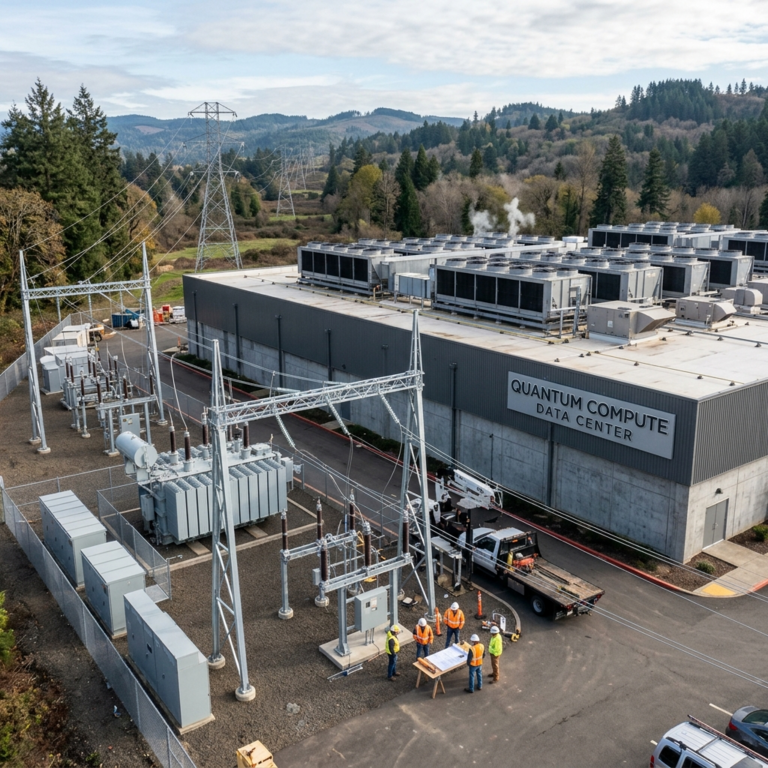
Unlike ordinary office buildings, hyperscale data centers run around the clock, and AI training can push thousands of specialized processors to draw power simultaneously. Cooling equipment adds another substantial load, while operators often seek highly reliable connections because even brief outages can interrupt services and damage costly operations. Utilities must plan generation, substations and transmission lines years ahead, yet data-center proposals can arrive faster than permitting, construction and long-range forecasts can accommodate. For communities, the result may be a queue of projects competing for limited capacity, with questions about water use, land, local bills and who bears the cost of upgrades when expensive network improvements serve both private campuses and the wider public for decades to come.
Still, industry insiders see the surge as a catalyst, not simply a burden: large, predictable customers can make investment in new grid capacity more attractive. Utilities and regulators may use the moment to replace aging transformers, strengthen transmission corridors and deploy digital controls that help balance supply and demand in real time. These upgrades can improve resilience for homes, hospitals and manufacturers, rather than serving only server campuses, provided planning anticipates broader community needs. Modernization also includes software: sensors and forecasting tools can reveal bottlenecks earlier, while automated systems route electricity more efficiently across a complex network, especially as extreme weather makes dependable service more difficult to maintain for every customer on the system locally.
The opportunity, however, depends on careful rules and realistic forecasts. A proposed data center is not the same as a completed one, and speculative projects can distort estimates if utilities build for every announced campus. Overbuilding risks leaving customers with expensive, underused infrastructure; underbuilding can delay projects and tighten supply. Regulators therefore face a difficult balancing act: verify demand, make expansion conditional where appropriate, and ensure costs are allocated fairly between data-center companies and other ratepayers.
The grid’s physical limits also shape where AI investment goes. Developers increasingly weigh access to power alongside fiber connections, land and tax incentives when choosing locations, and a delayed electrical hookup can derail an otherwise viable project. Some companies may build on-site generation or storage to secure service, while others can shift certain computing workloads to times or regions with more available electricity. Batteries can smooth short periods of strain, but they cannot substitute for adequate generation and transmission when demand stays high for hours or days.
That flexibility could become a meaningful part of the solution. Data centers may be able to reduce or reschedule nonurgent computing during peak periods, although AI services that users expect instantly cannot all be paused without consequences. Better coordination between operators, utilities and grid managers could help distinguish essential workloads from tasks that can wait. In parallel, clean energy, storage and expanded transmission can add supply, but projects still face permitting, financing and construction delays that make near-term planning essential.
For consumers, the outcome will show up in more than faster AI tools: electricity bills, service reliability and the pace of local investment are all at stake. Businesses beyond technology also depend on stable power, and households should not automatically finance infrastructure designed chiefly to serve private campuses. The AI data-center boom is therefore a stress test and a rare opening to modernize an aging system at once. Whether it becomes a shared upgrade or a costly bottleneck will depend on transparent planning, fair cost-sharing and a willingness to build a grid capable of supporting both digital growth and everyday needs.