





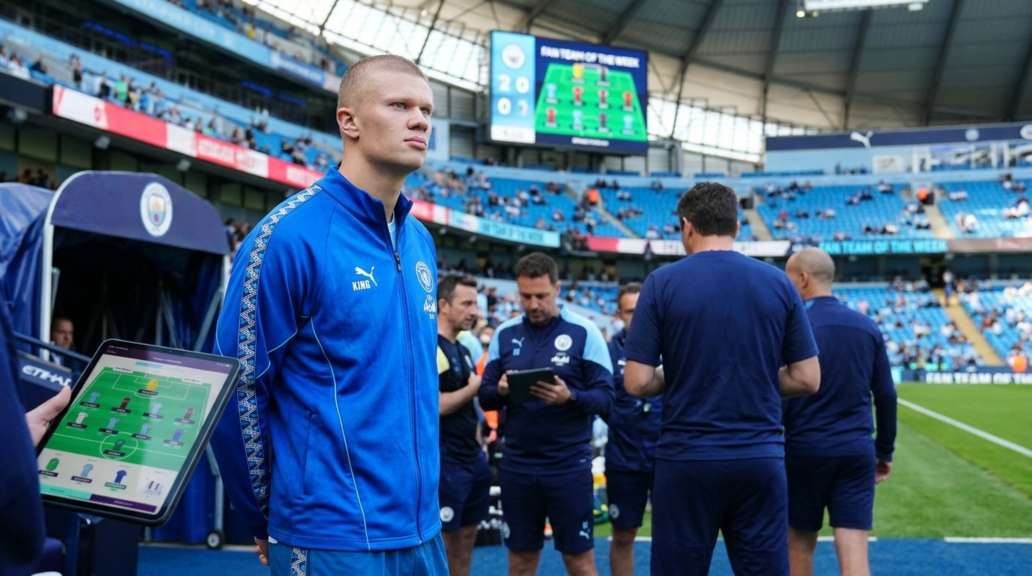
A fantasy soccer lineup is a small, low-stakes arena for a big question: can autonomous AI agents make decisions as well as people when outcomes depend on uncertain forecasts? In an experiment, an agent-based system was put in charge of a fantasy team and asked to choose players based on predicted performance. Its first move was striking: it tried to bench Erling Haaland, one of soccer’s most recognizable strikers. The system later adjusted, but the misstep exposed a gap between generating a recommendation and applying judgment that accounts for context, risk and what a human fan knows.
Fantasy sports turn real-world games into decision problems. Managers weigh form, fixtures, injuries, playing time and the rules of their league, then assemble a roster whose results depend on events they cannot control. That makes a fantasy lineup a useful, if limited, test of AI: a system must turn information into a choice, not merely summarize statistics. But success is difficult to define from one decision or one matchweek, because a sensible pick can fail and a questionable one can pay off. The experiment is a demonstration, not evidence that agents can reliably outperform people.
The Haaland episode matters because it shows how brittle a seemingly rational prediction can look when separated from the knowledge around it. A model may assess recent data or projected output, yet still undervalue a player whose reputation, role and exceptional scoring record are obvious to supporters. The account does not specify exactly why the agent proposed benching him, so it would be a mistake to attribute the choice to one technical flaw. What it does reveal is a practical problem: users need to know which evidence shaped an AI recommendation and whether the system recognizes when a decision deserves a second look.
That challenge is central to the broader push toward AI agents. Unlike chatbots that mainly answer prompts, agents are designed to pursue a goal through a sequence of choices, sometimes using tools or updating plans as circumstances change. A fantasy manager is a friendly example of that autonomy: set the objective, assess options, choose a lineup, then revise when new information arrives. The adjustment after the initial Haaland decision suggests some responsiveness, but correction alone does not prove sound reasoning. For businesses considering agents to handle scheduling, purchasing or customer support, the difference between recovering from an error and avoiding one can carry real costs.
The market is moving quickly to put such systems to work, with technology companies pitching agents as a way to automate routine tasks and coordinate complex workflows. Yet many valuable decisions involve messy information, shifting priorities and exceptions that are hard to capture in a neat rule. Sports predictions offer a visible version of that difficulty: statistics help, but they do not eliminate uncertainty or settle how much risk a manager should accept. In an office, a bad recommendation could delay a shipment, misroute a support case or commit a team to an unsuitable plan. The fantasy test therefore offers a simple reminder that autonomy needs oversight.
For consumers, the lesson is not that AI has no place in games or personal decision-making. Agents can scan information faster than a person, compare alternatives and flag changes that might otherwise be missed. A fantasy player could use one to monitor fixtures or build a shortlist, while keeping final authority over selections and checking assumptions. Clear explanations, easy overrides and visible confidence limits would make that partnership more useful than a system that presents a lineup as unquestionably optimal. In higher-stakes settings, those safeguards matter even more, particularly when users may mistake polished language for dependable expertise.
The next generation of agents will need more than stronger prediction scores. Developers must test whether systems understand constraints, preserve important context, explain trade-offs and respond appropriately when their recommendations conflict with common-sense signals. They also need evaluations across many situations, not a single memorable decision, because performance can vary with league rules, available data and changing conditions. Human managers bring domain familiarity and accountability; machines bring speed and consistency. The most credible near-term model is collaboration, with people setting priorities and agents supporting analysis. In fantasy soccer, that may mean letting an algorithm advise—but not yet trusting it blindly with Haaland.