









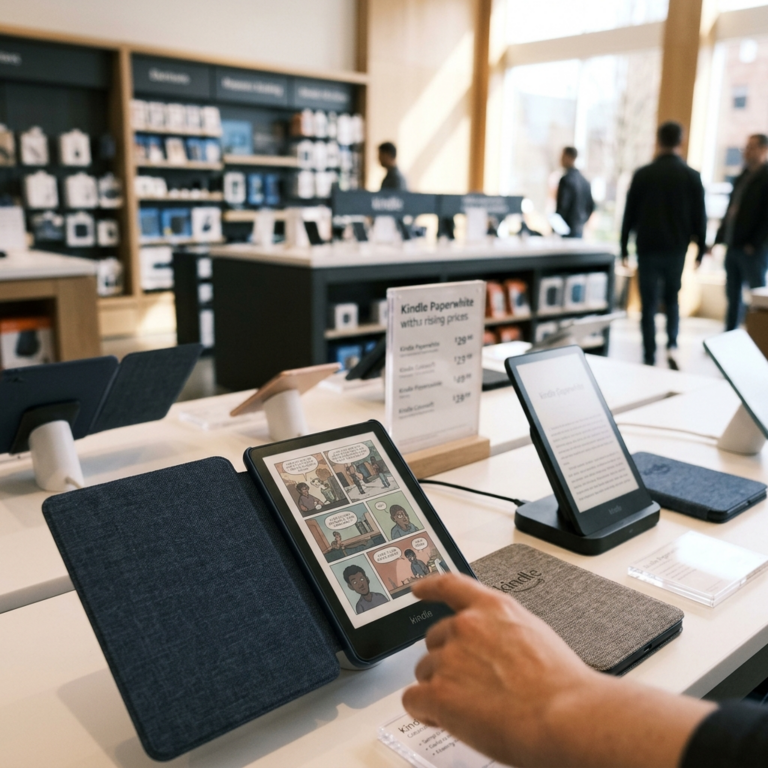
Amazon’s 2026 Kindle refresh puts accessories in the spotlight with redesigned seven-inch Paperwhite and Colorsoft readers, but its most consequential message may be about value rather than hardware. For a product category built around long life and familiar routines, refreshed styling alone rarely persuades owners to replace a device that still opens books reliably. Amazon’s lineup asks shoppers to weigh incremental convenience, accessory compatibility and rising prices against the quiet durability that has made e-readers appealing in the first place. That tension makes this release more than a routine product update: it tests how much readers will pay for polish around an increasingly mature screen, where basic reading already works exceptionally well for many.
The new family’s two named models serve distinct appetites: the Paperwhite remains the straightforward choice for text, while the Colorsoft offers color for covers, illustrations and other visual material. Both have seven-inch displays and redesigned bodies, according to the launch description, placing the emphasis on refinement rather than a wholesale reinvention of digital reading. The practical difference between monochrome and color is clearest when a book depends on images; for novels and most prose, color may add little to the reading experience. That makes the choice less about a universal upgrade than about matching a screen to what someone reads and how often they use it.
Accessories are central to Amazon’s pitch, a notable shift in emphasis for devices traditionally sold on their own virtues: glare-free reading, portability and long stretches between charges. Cases and related add-ons can protect a reader, make it easier to carry, or lend a more personal feel, but they also raise the total price of ownership. A redesigned device may make an existing case incompatible, turning a modest hardware purchase into a replacement bundle for committed users. Buyers should therefore compare the price of the reader plus the accessories they actually need, rather than treating a headline device price as the whole cost.
That calculation matters because Kindle hardware is no longer an automatic bargain simply because it replaces stacks of printed books. Rising prices sharpen the distinction between an upgrade that solves a real problem and one that mainly refreshes a familiar experience. For a first-time buyer, a current model can still offer a simple way to carry a library and read without the interruptions of a general-purpose phone or tablet. Existing owners, however, have a higher bar: unless their device is damaged, slow, or missing a feature they genuinely want, keeping it may be the more sensible choice.
The broader market context helps explain Amazon’s strategy. E-readers compete not only with rival dedicated devices but also with reading apps on phones and tablets, where screens are brighter and more versatile but notifications and other distractions are never far away. Amazon has long differentiated Kindle through an ecosystem that joins hardware to a large digital bookstore and a focused reading environment. Accessories extend that relationship beyond the screen, creating chances for additional sales while making the device feel more tailored to its owner. The challenge is to make that ecosystem feel useful, not merely expensive.
Longevity is part of the value equation, too, and a refresh should prompt shoppers to ask how long their next device will remain supported. Reports from Kindle owners with older models illustrate a concern common across consumer electronics: a reader may still function even as updating, connecting, or purchasing content becomes difficult. That does not establish the support life of these new models, but it underscores why software access matters as much as a fresh design. Buyers investing more should expect clear support policies and dependable access to their libraries, while Amazon must preserve trust among customers who keep hardware for years.
For readers, the best decision is personal rather than generational. A color-focused user, a first-time Kindle buyer, or someone whose old reader is failing may find the redesigned lineup and its accessories compelling; a satisfied Paperwhite owner may see little reason to spend more. For Amazon, the release is a test of whether design and add-ons can sustain interest as the core reading experience becomes harder to improve dramatically. The answer will shape more than one buying season: it will signal whether the next phase of e-readers is about better screens, richer ecosystems, or simply asking loyal readers to pay extra for familiar comfort.