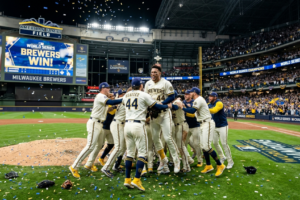






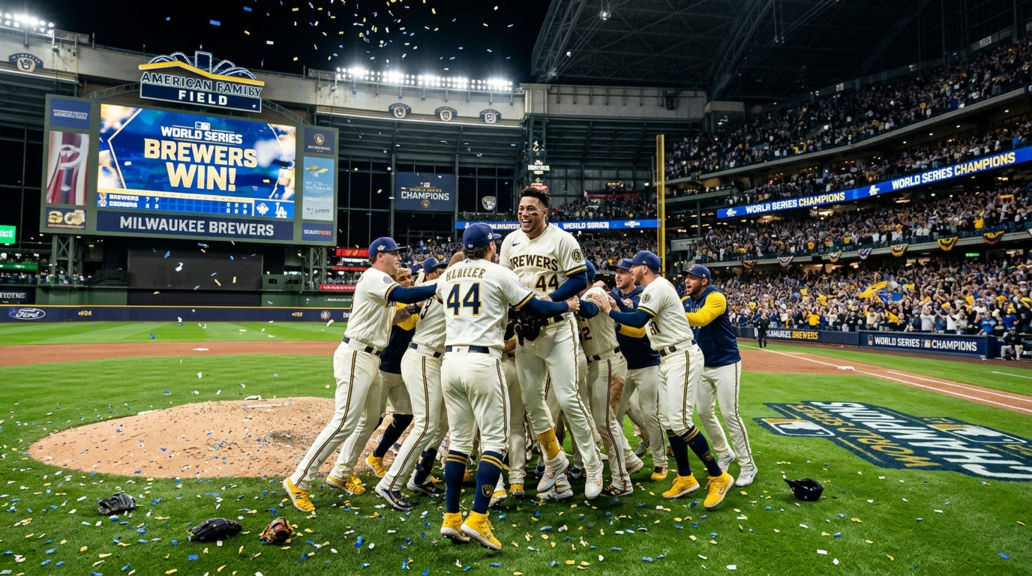
For decades, Milwaukee baseball carried the familiar burden of the small-market argument: that a club without the deepest pockets could build a contender, perhaps, but not finish the job. The Brewers have now answered with the one result that silences every caveat, turning 103 regular-season victories into the franchise’s first World Series championship. Their sweep of the Los Angeles Dodgers was not merely a trophy presentation; it was a public challenge to baseball’s financial pecking order. In a sport where spending power is often treated as destiny, Milwaukee made preparation, conviction and collective nerve look just as formidable.
The championship completes a season that was exceptional long before the final out. A 103-win record demanded consistency through months of travel, injuries, slumps and the daily pressure of being the team every opponent wanted to knock off. Then came the postseason, where regular-season dominance offers no guarantee and every mistake can stretch into an anxious winter. Milwaukee did not simply survive that test against the Dodgers. It swept a powerhouse, converting its long campaign into the cleanest possible statement of superiority.
That is what makes the accomplishment resonate beyond Wisconsin. The Brewers have often had to identify value, develop talent and make difficult roster decisions while richer rivals can absorb expensive mistakes or add star power at the deadline. Their model cannot be reduced to thrift alone: good scouting, player development, smart decisions and a clubhouse capable of trusting its plan all mattered. But the financial contrast is impossible to ignore, especially when the final opponent represents the kind of major-market force small-budget clubs are routinely told they cannot match.
Milwaukee’s players supplied the human drama behind the economics. A championship is built in the public moments, when a rally turns a tense game, and in the quieter ones, when teammates keep showing up after a rough night or a long road trip. For veterans, the title rewards years spent chasing a finish that had always eluded the franchise; for younger players, it offers an immediate place in club history. Together, they carried the weight of a city’s hope without letting the scale of the occasion overwhelm their baseball.
The sweep also gives the Brewers a powerful answer to doubts about whether their approach could hold up when the stakes rose. October baseball magnifies every weakness, and the Dodgers arrived with the talent and reputation to punish any team that played timidly. Milwaukee instead imposed its own standard, winning the decisive moments and leaving no opening for a comeback. That is the difference between a remarkable regular season and a championship: the ability to keep executing when the opponent, the crowd and the consequences all grow larger.
Now the victory lands squarely in baseball’s argument over competitive balance and a possible salary cap. Owners have long cited the advantage of high-revenue teams as evidence that tighter payroll rules are needed, while critics warn a cap could limit player earnings without guaranteeing smaller clubs spend more. The Brewers’ run complicates both sides’ talking points. Their success shows that a lower payroll need not mean a lower ceiling, but one championship cannot erase the structural advantages that accumulate over seasons or settle how baseball should share its money.
For fans, the debate is less abstract than the joy of seeing a first title arrive at last. Milwaukee supporters watched a team built without the sport’s biggest budget deliver its best possible ending, and the sweep gave that achievement a breathtaking finality. The championship will be remembered for the wins, the pressure absorbed and the players who made history together; it will also be invoked whenever someone claims small markets cannot compete. The Brewers have not ended baseball’s argument over money, but they have changed its terms—and given their city a celebration generations will carry.