








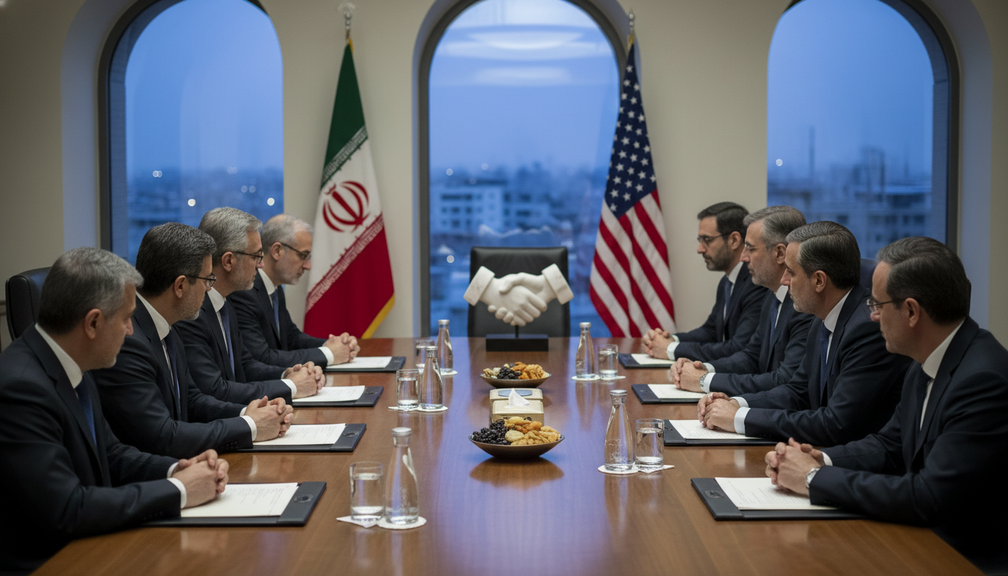
In the tumultuous landscape of international relations, the recent overtures from Iran towards ‘fair’ talks with the United States present a critical juncture for diplomacy and conservative principles. The essence of conservative foreign policy lies in the judicious balance of strength and dialogue, where robust national interests meet the pursuit of peaceful resolutions. As Iran’s president signals a willingness to engage in negotiations, it is imperative to approach these discussions with a blend of caution and optimism, grounded in a deep understanding of history’s lessons.
Conservatives have long championed the notion of diplomacy guided by dignity and prudence, emphasizing the importance of mutual respect and sovereign autonomy. The idea of ‘fair’ talks aligns with the core tenets of conservative philosophy, which values dialogue over conflict and respects the sovereignty of nations. While challenges and complexities abound in the realm of international relations, the prospect of constructive engagement between Iran and the US holds promise for fostering stability and reducing tensions in the volatile Middle East region.
Amidst the backdrop of escalating geopolitical tensions, the need for diplomatic finesse and strategic acumen cannot be overstated. The delicate dance of negotiation requires a deft touch informed by a deep-rooted commitment to national security and global stability. Iran’s openness to ‘fair and equitable’ talks underscores the potential for diplomatic breakthroughs that can avert military conflict and pave the way for peaceful coexistence. As conservatives, we must uphold the principles of prudence, restraint, and strategic clarity in navigating the intricate web of international relations.
The specter of Iran’s nuclear program looms large in these discussions, casting a shadow of uncertainty over the prospects for diplomatic progress. While Iran maintains that its missile program is non-negotiable, the intricacies of nuclear talks demand a nuanced approach that balances security concerns with diplomatic engagement. The lessons of history remind us of the perils of unchecked proliferation and the imperative of robust verification mechanisms to ensure compliance with international agreements.
As President Trump signals a willingness to engage with Iran in a spirit of dialogue, the onus falls on both parties to approach these talks with a spirit of openness, mutual respect, and a commitment to lasting peace. The conservative values of prudence, diplomacy, and sovereignty underscore the importance of finding common ground through dialogue and negotiation, rather than resorting to brinkmanship and confrontation. By embracing the principles of fair and just talks, Iran and the US can chart a path towards stability, security, and mutual prosperity in the volatile Gulf region.
In conclusion, the recent developments in Iran’s approach to negotiations with the US offer a glimmer of hope in an otherwise turbulent geopolitical landscape. As conservatives, we must remain steadfast in our commitment to principles of diplomacy, sovereignty, and national security, while fostering a culture of dialogue, respect, and mutual understanding. By embracing the ethos of ‘fair’ talks, Iran and the US have the opportunity to transcend differences, build trust, and forge a path towards lasting peace and stability in the Middle East.