






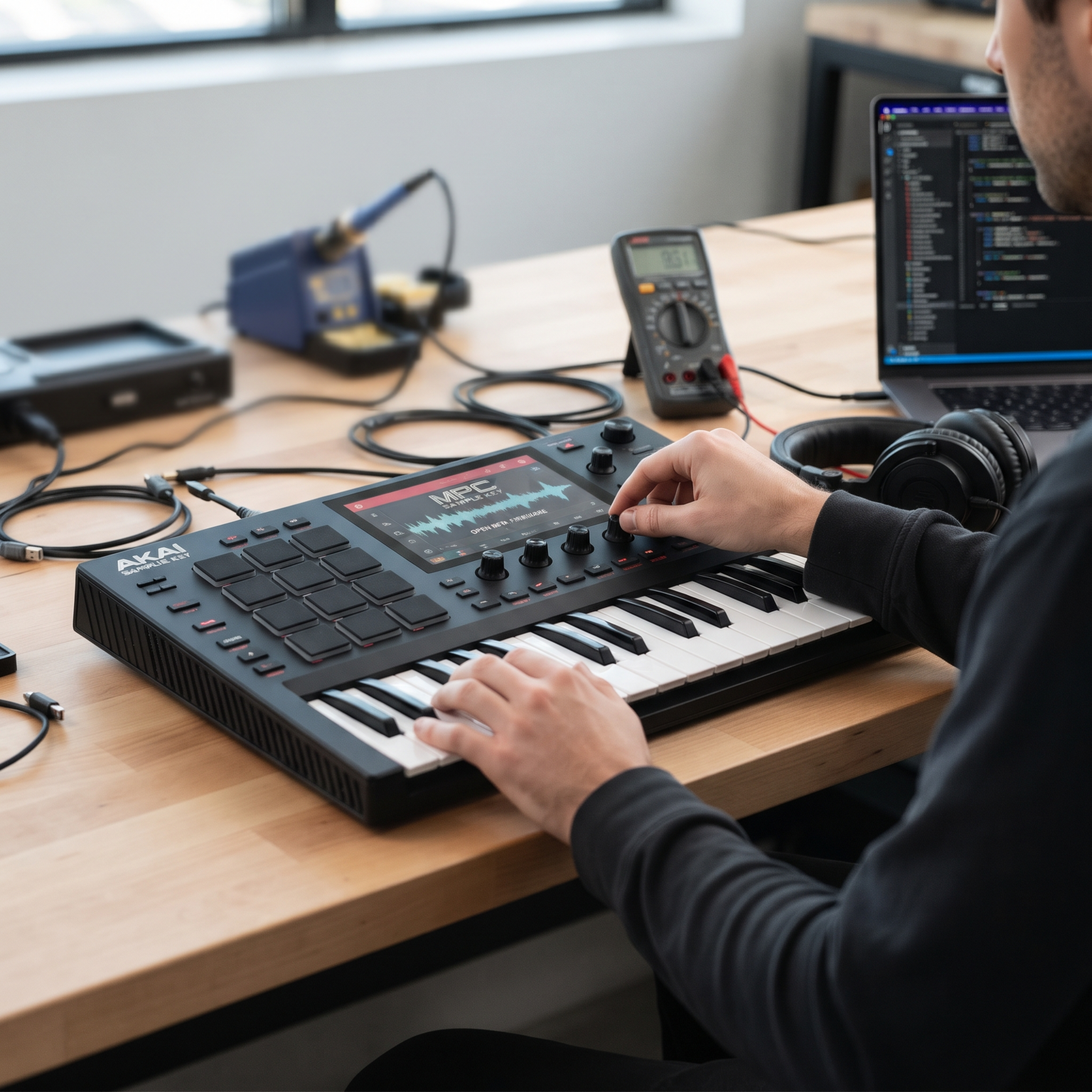
Akai has teased the MPC Sample Key, a new music-making device, and says it plans to open-source the software that runs it. That combination puts an intriguing promise beside a familiar question: what, exactly, is the hardware? The Verge has obtained exclusive images, but Akai has not announced a release date, price, or detailed specifications. For musicians and technology enthusiasts, the news is therefore less a conventional product launch than an early signal about how a major instrument maker might share control of its tools. The software pledge could prove more consequential than the device’s initial feature list, once Akai explains what “open source” will mean in practice. Until then, buyers have a compelling idea, not enough information to judge a purchase.
The MPC name carries substantial weight in electronic music. Akai’s Music Production Center instruments helped make sampling, sequencing, and beat construction accessible through hands-on hardware, with workflows that let musicians build arrangements without treating a computer as the sole creative hub. Modern MPC products combine physical controls with increasingly capable software, reflecting a broader market in which standalone instruments compete with laptop-based production. A product called Sample Key suggests a meeting point between sampling and keyboard performance, but the name alone does not establish its layout, capabilities, or place in Akai’s lineup. The distinction matters: a compact companion, an all-in-one workstation, and a specialized controller would serve different musicians and command different prices.
Opening the software could give owners something increasingly valuable: the ability to adapt a device instead of waiting for its manufacturer to decide which features deserve attention. Depending on the license and the code Akai releases, users or independent developers might inspect how the system works, fix problems, build new functions, or tailor workflows to particular instruments and performance styles. That could extend a product’s useful life and encourage a community to share tools and knowledge around it. But “open source” covers a range of commitments. Publishing selected code is not the same as enabling people to rebuild the complete operating system, modify every component, or distribute customized versions without restrictions.
For that reason, the announcement’s practical value will depend on details that are not yet public. Akai will need to identify the software covered, choose a license, explain how contributions will be reviewed, and say whether users can install modified builds on the hardware. It also matters whether essential features depend on proprietary services, licensed technologies, or components that cannot legally be shared. Clear documentation and a reliable update process can turn openness into a usable benefit; without them, source code may remain a curiosity for technically confident owners. Security is another consideration. User modification can invite experimentation, but updates and safeguards still matter when an instrument is part of a professional studio or a live performance setup.
The market context makes Akai’s move notable. Music hardware increasingly lives between two models: tightly integrated products designed to work immediately, and flexible platforms that reward tinkering and outside development. Manufacturers have traditionally protected software because it shapes customer experience, supports paid upgrades, and helps distinguish one product from another. Opening code can build loyalty and draw in developers, but it also asks a company to share some control over the product’s evolution. For Akai, the approach could reinforce the MPC line’s reputation as a creative platform rather than a fixed appliance. Whether that strategy translates into sales will depend on execution, support, and a clear reason for musicians to choose this device over established alternatives.
For consumers, the first practical question remains price. A generous software policy cannot compensate for hardware that is too expensive for its intended audience, while an affordable instrument with meaningful customization could appeal to beginners, performers, and experienced producers alike. Buyers will also want to know whether the Sample Key works independently, connects to a computer or other MPC gear, and supports familiar sample libraries and accessories. None of those details has been confirmed in the available announcement. The absence of a date makes it difficult for studios and retailers to plan, and the absence of specifications makes comparisons premature. Interested musicians should treat the teaser as an invitation to watch, not as a reason to postpone a purchase already planned.
The broader significance lies in the question Akai has raised: can an instrument maker sell dependable hardware while letting its users reshape the software? If the answer is yes, the Sample Key could help make openness a selling point in a market where longevity and personal workflow matter as much as headline specifications. A healthy developer community might produce adaptations Akai would not prioritize, while the company could still provide official support and a coherent out-of-box experience. That outcome is not guaranteed; vague licensing, limited code, or weak documentation could leave the promise mostly symbolic. Akai has offered a direction, not a finished argument. The price, launch timing, technical details, and scope of the source release will determine whether this teaser becomes a meaningful new chapter for MPC users or simply an intriguing idea awaiting its instrument.