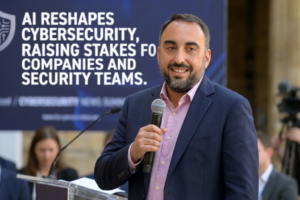






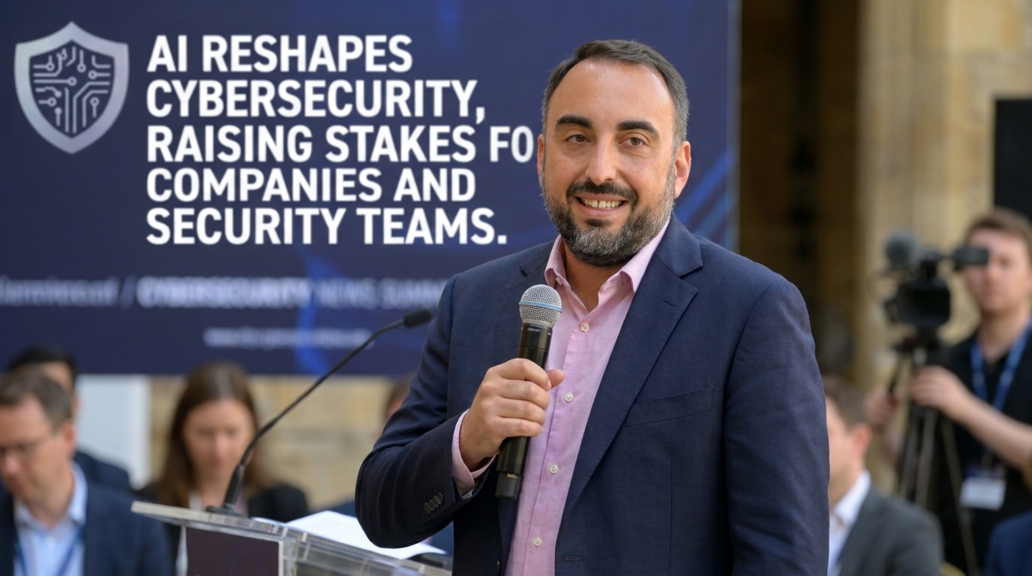
Artificial intelligence is changing cybersecurity from a contest of human-paced investigation into one increasingly shaped by machine speed. That shift is the subject of a conversation with Alex Stamos, chief security officer at Cognition, opening a special series on AI’s effects in the real world. The central issue is not simply whether software can help find vulnerabilities or sort alerts; it is how readily the same capabilities can strengthen attackers. For companies, the result is a more urgent calculation: security practices built around yesterday’s pace may not keep up with tomorrow’s threats.
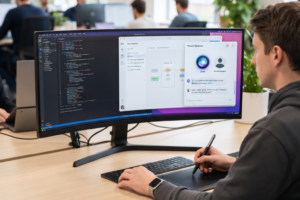
For years, defenders have struggled with a basic imbalance: organizations generate more security signals than their teams can investigate, while sophisticated attacks can exploit small gaps in complex systems. AI can help sift through logs, summarize incidents, identify unusual behavior, and make technical information easier to act on. Those gains matter because overloaded analysts routinely have to decide which warnings deserve scarce attention. Yet automation does not make a warning correct, nor does a polished explanation guarantee that a proposed fix is safe; people still need to verify what systems are telling them.
The same acceleration can work in an adversary’s favor. Generative tools can make it easier to draft convincing messages, adapt material for different targets, or assist with technical work that once demanded specialized expertise. That does not mean every criminal group suddenly becomes highly capable, or that AI alone turns an attempted intrusion into a successful breach. It does mean the cost and effort required for some parts of an attack may fall, giving defenders less time to recognize and contain suspicious activity. Stamos’s perspective is valuable in that debate because security leaders must prepare for capabilities as they develop, not wait for perfect evidence of their eventual scale.
The market consequence is likely to be a reshuffling of security priorities, rather than a simple replacement of existing products. Vendors are racing to add AI features to monitoring, identity protection, software development, and incident response, while buyers must distinguish measurable improvements from attractive demonstrations. A useful tool should reduce investigation time, improve detection, or help teams respond consistently—not merely produce more alerts or confident-sounding summaries. Organizations also need to ask where a system gets its data, who can access that information, how its decisions can be checked, and what happens when it is wrong.
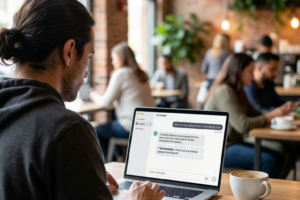
That scrutiny becomes especially important as businesses weave AI into ordinary operations. Employees may use assistants to draft code, analyze customer information, or speed up routine office work, sometimes without a clear view of what data they are sharing. Attackers may target those workflows, while poorly controlled systems can expose sensitive information or create new routes into company networks. Security teams therefore need to work with product, legal, and business leaders to map where AI is used and set practical rules for access, data handling, testing, and oversight. Blocking every tool is rarely a durable strategy if workers can adopt alternatives without permission.
Regulation adds another reason to treat cybersecurity as part of product design, not a final inspection. The FDA’s updated cybersecurity requirements for medical-device software, discussed in 2025, underline that makers must take security seriously across development and product support. The rules do not eliminate risk, but they raise expectations for teams building technology whose failure could affect patient safety. More broadly, boards and executives are being asked to understand cyber exposure even when many organizations lack large, dedicated security departments. AI may help smaller teams extend their reach, but it cannot replace clear accountability or investment in basic defenses.
The practical response is less glamorous than a promise of fully automated protection: keep software updated, secure accounts with strong authentication, limit unnecessary access, rehearse incident plans, and ensure that staff know how to report suspicious activity. Teams should test AI-assisted security tools against realistic tasks, measure whether they improve outcomes, and preserve human review for high-impact decisions. They also need plans for failures, including inaccurate detections, leaked prompts, and automated actions that disrupt legitimate work. In a faster threat environment, resilience depends on disciplined processes as much as on clever models.
The broader stakes extend beyond individual companies. A breach can interrupt services, expose personal information, damage trust, and impose costs on customers and communities that never chose the systems involved. At the same time, well-governed AI could make expertise more accessible, helping understaffed organizations spot problems sooner and respond with greater consistency. The technology is neither a guaranteed shield nor an automatic catastrophe; its impact will depend on who can use it, how systems are secured, and whether institutions adapt quickly. Stamos’s conversation opens a timely inquiry into that balance: the future of cybersecurity will be shaped not by AI alone, but by the choices people make around it.