








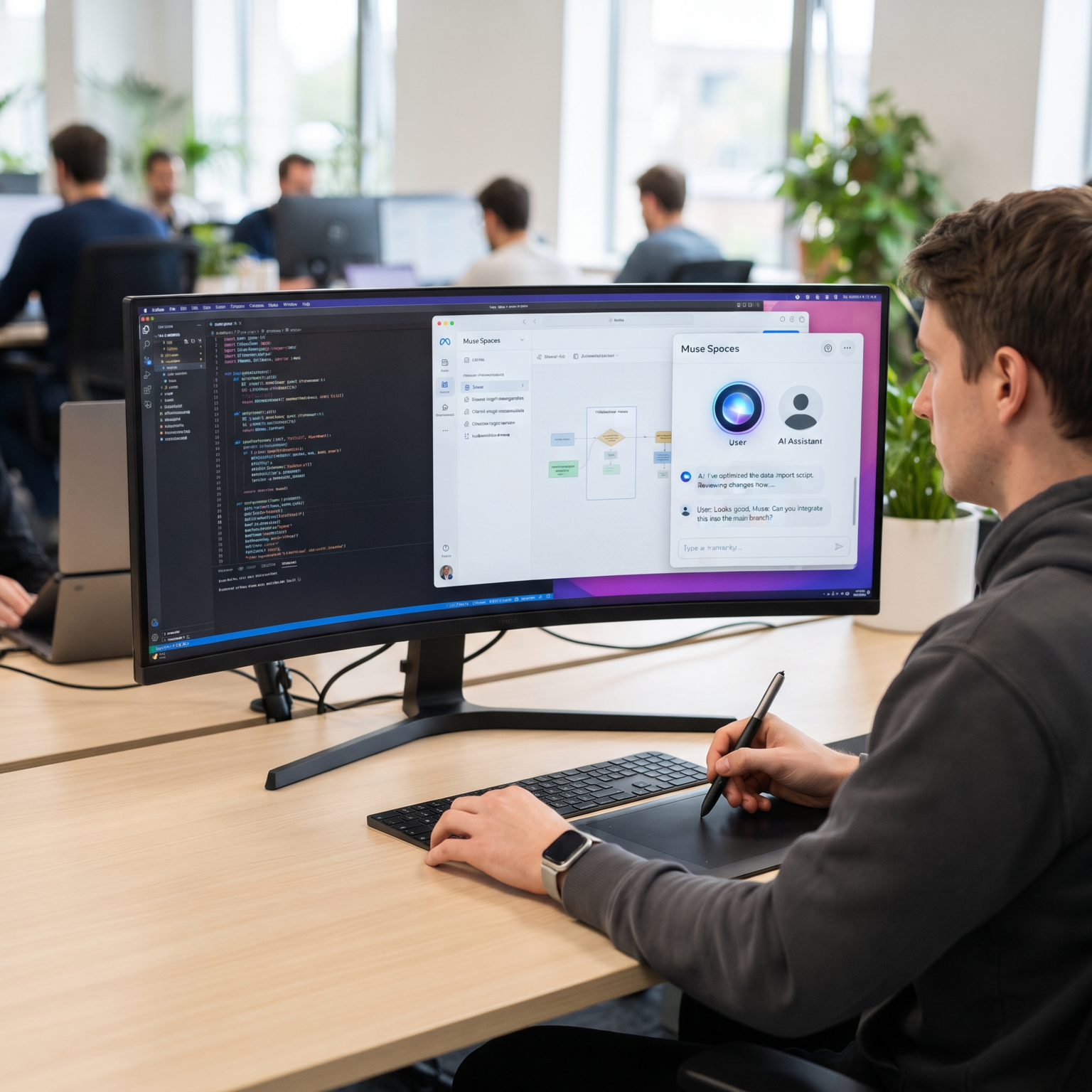
Meta is giving its Muse AI agents a new place to work with people: Spaces, a feature that organizes conversations around projects instead of leaving every request in one long, linear chat. The change may sound like a modest interface update, but it points toward a larger ambition: turning an assistant from a clever answer engine into a participant in ongoing work. Meta says Spaces gives users separate conversations for projects, creating a dedicated setting to ask questions, develop ideas, and coordinate tasks with Muse. The launch arrives as AI companies compete to make agents useful not just in isolated prompts, but across the shared routines where decisions and deliverables take shape.
A Space is, in practical terms, a project-based home for interactions with Muse. Instead of asking the assistant to remember context buried in a sprawling conversation, users can keep work on a particular task together in its own place. That organization could make it easier to return to an idea, refine instructions, or build on earlier exchanges without starting from scratch. Meta’s description also points to the possibility of connecting Spaces with other people, though the company is exploring sharing and collaboration rather than presenting every such capability as universally available today.
That distinction matters because collaboration changes what an AI assistant is expected to do. A conventional chatbot usually serves one person at a time, answering questions or generating text in response to prompts. A shared workspace, by contrast, can become a setting where people contribute context, divide tasks, and use an agent to help move work forward. If Muse can keep track of a project’s aims and the material gathered around it, users may spend less time repeating background and more time evaluating suggestions or making decisions. The promise depends on how reliably the system handles context, permissions, and changes made by multiple participants.
Meta has been building Muse’s usefulness through connections to its business products. The company has described expanding the agent for small businesses, with links to Instagram professional-account analytics, Facebook Pages, and Meta advertising accounts. Those integrations can help an owner examine performance or manage routine marketing questions without hopping between dashboards. A Space could give that work a more coherent home: a shop might keep a campaign’s goals, draft ideas, and questions about results together, while returning to the same project over time. The feature’s value will depend on the depth of those integrations and whether the answers are accurate enough to inform real decisions.
The move also reflects a wider shift in the AI market from model demonstrations toward products embedded in everyday workflows. Companies including Microsoft, Google, and a crowded field of startups are adding assistants to collaboration suites, office tools, and business software. The competition is no longer only about which system can write the most fluent response; it is about which assistant can fit into existing habits, work with relevant information, and save time without adding complexity. Meta has a particular advantage in the reach of its social and advertising services, but that reach does not automatically make Muse indispensable. People and businesses will judge it by whether it solves problems consistently, not by the size of the platform behind it.
For consumers, Spaces could make personal projects easier to manage, from planning an event to researching a purchase or organizing creative work. For small businesses, a persistent project area may help keep marketing conversations and operational questions from becoming scattered across chats and services. Yet shared AI workspaces raise familiar questions: who can see the information, what gets retained, and how easily can participants distinguish generated suggestions from verified facts? Businesses may also need controls over access, records, and sensitive data before placing customer or financial information in an assistant. Clear settings and dependable explanations will matter as much as an inviting interface.
Spaces is therefore less a dramatic reinvention than a meaningful test of how AI assistants might become collaborative tools. Its success will hinge on details users can feel: whether Muse remembers the right context, whether integrations deliver useful information, and whether working together is simpler than using separate chats and documents. Meta’s broader challenge is to turn its enormous consumer and business ecosystem into a trusted environment for AI-assisted work, while addressing privacy and reliability concerns that grow with every connection. If it succeeds, project-centered agents could become a familiar layer in digital work; if not, Spaces may remain a tidier container for conversations that still require people to do most of the organizing.