









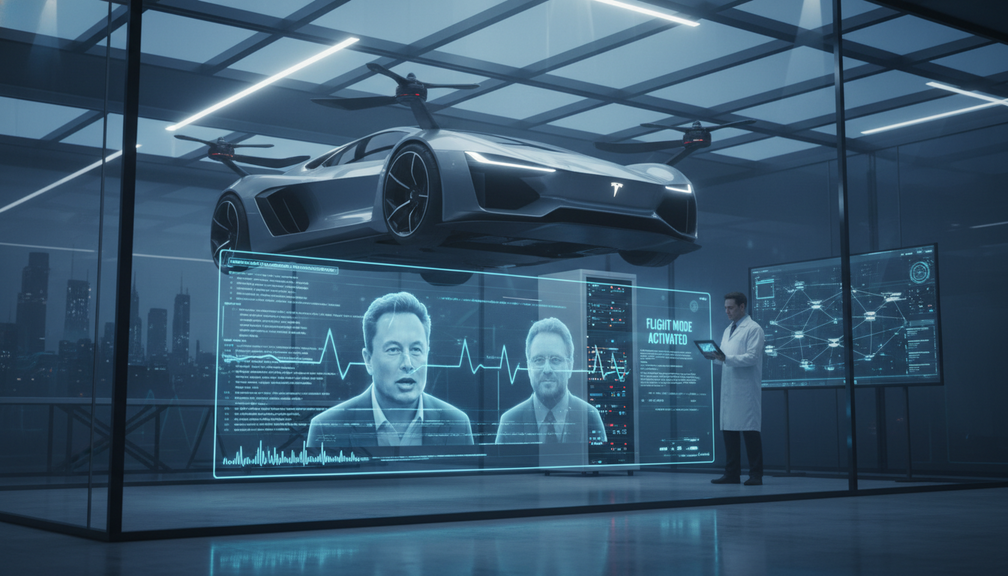
During a recent appearance on Joe Rogan’s podcast, Elon Musk dropped a bombshell hinting at the development of a flying car under the Tesla brand. While Musk’s ambitious timelines are notorious for delays, the idea of a Tesla flying car has captivated the imagination of tech enthusiasts worldwide. The potential unveiling of a flying car by the end of the year could mark a significant milestone in transportation innovation, potentially disrupting the market as we know it.
Musk’s vision for a flying car aligns with his broader goal of revolutionizing transportation with sustainable and futuristic solutions. The concept of a Tesla flying car raises questions about the practicality, safety, and regulatory hurdles that such a groundbreaking technology would face. If realized, a flying car could redefine urban mobility, offering a new dimension of freedom and efficiency to commuters.
The integration of electric propulsion technology in a flying car could address environmental concerns and pave the way for a cleaner and more sustainable mode of transport. Musk’s track record of pushing the boundaries of technology with companies like SpaceX and Tesla lends credibility to the feasibility of a Tesla flying car. The potential market impact of a flying car from a company known for innovation and disruption cannot be understated.
While the idea of a flying car may seem like science fiction, the rapid advancements in electric vehicle technology and autonomous systems make it a plausible reality in the near future. The convergence of electric propulsion, AI, and aerospace engineering could unlock a new era of personal aviation, transforming the way we think about commuting and transportation. A Tesla flying car could represent the next evolution in the automotive industry.
The emergence of a flying car from Tesla would not only capture the attention of tech enthusiasts but also raise important questions about infrastructure, airspace regulations, and societal implications. The potential benefits of a flying car, such as reduced congestion, faster travel times, and increased accessibility, could revolutionize urban planning and transportation systems. However, challenges related to safety, noise pollution, and airspace management must be carefully addressed.
In a world where autonomous vehicles are becoming a reality and space tourism is on the horizon, the concept of a flying car from Tesla adds another layer of excitement to the future of transportation. Musk’s ability to generate buzz and push the boundaries of technological innovation has set the stage for a potential paradigm shift in the automotive industry. The unveiling of a Tesla flying car could mark a turning point in the way we envision the future of mobility.
Overall, Elon Musk’s teaser about a flying car on Joe Rogan’s show has sparked speculation, excitement, and debate within the tech community. Whether or not a Tesla flying car becomes a commercial reality remains to be seen, but the mere possibility of such a groundbreaking innovation underscores the transformative potential of technology in shaping the world we live in.




Discover more about oral care at prodentim negative reviews and see what makes it stand out.
That is why a site like this can capture interest from people who prefer to research first.
## Section 2
The primary benefit of a site like this is its ability to keep information centralized.
## Section 3
In this way, presentation becomes just as important as the topic itself.
## Section 4
That is why a site with a focused approach can remain relevant and useful.