


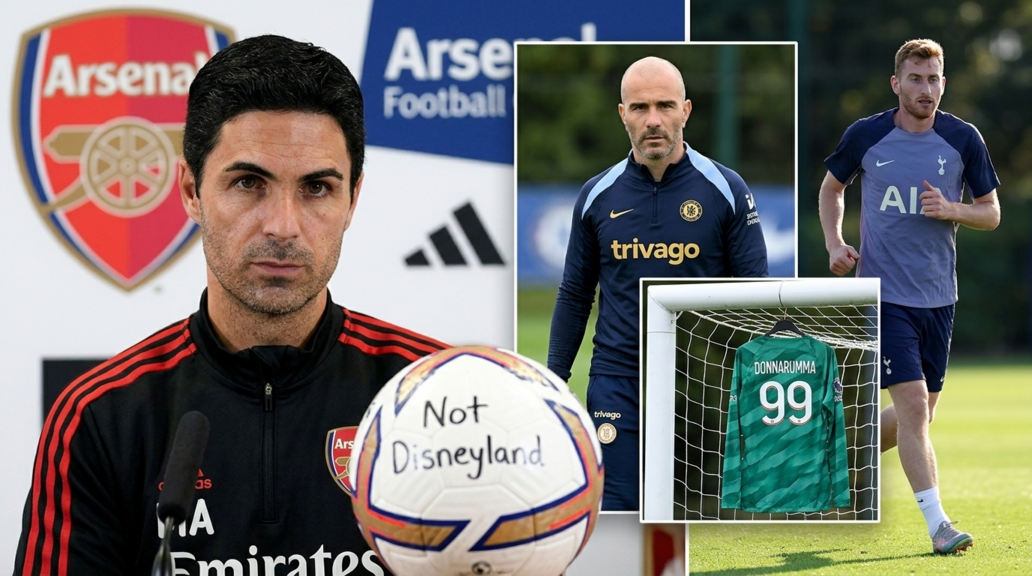
The Premier League’s most revealing moments are not always goals or trophies; sometimes they arrive in a dressing-room message, a selection warning or a long-awaited return. This week, Mikel Arteta delivered a hard lesson to Arsenal teenager Max Dowman, Enzo Maresca made clear that Gianluigi Donnarumma must fight for Chelsea’s goalkeeping job, and Tottenham saw Dejan Kulusevski edge back toward full fitness. Their situations differ, but each speaks to the demands of a league where talent, status and hope are tested under relentless scrutiny. For supporters, the stories offer a reminder that progress is rarely smooth, even for gifted players and celebrated names.
Dowman’s red card brought the sharpest public reality check. Arteta’s message was blunt: top-flight football is no “Disneyland.” The phrase was not a dismissal of the teenager’s ability; it was a warning that senior competition carries consequences, and that promise alone cannot protect a player from them. For Arsenal, who have invested heavily in developing young talent, the challenge is to let a gifted prospect learn without allowing one flashpoint to define his future. Dowman must absorb the lesson, respond with discipline and keep earning the trust that brought him into the first team’s orbit.
That balance is familiar to Arsenal fans, who have watched Arteta build a side expected to contend while still finding pathways for youth. A red card can invite quick judgments, particularly when a young player is under a bright spotlight, but one incident is not a career verdict. The manager’s responsibility is both to demand standards and to help a teenager understand them. Dowman’s next steps will matter more than the headline: how he trains, how he handles frustration and whether he turns a difficult moment into maturity. The message may sting, but the club’s belief in his potential need not disappear.
At Chelsea, Maresca’s warning to Donnarumma was a different kind of pressure: no place is guaranteed, not even for a goalkeeper with a major reputation. The Italian’s standing in the game does not cancel the need to perform or persuade his manager that he is the right choice. Maresca has made competition explicit, a signal to the squad that selection will be earned rather than inherited. For a goalkeeper, that uncertainty can be particularly exposing; one decision can shape a match, and every training session becomes part of the case for inclusion. The message is clear, but the response will be watched just as closely.
Chelsea supporters know that finding stability in goal can influence a team’s confidence from the back forward. A coach who keeps the position open may sharpen standards, though it can also place extra pressure on the player asked to prove himself. Donnarumma now has a straightforward task: turn ability into the consistency and authority Maresca wants. The contest is not simply about reputation versus a rival; it is about what best serves Chelsea in the next match and across a demanding campaign. In a squad competing for places, the manager’s warning is a reminder that names do not select themselves.
For Tottenham, Kulusevski’s story offers a more hopeful kind of tension. After a 17-month injury layoff, the forward has returned with two late substitute appearances, first in the win over Coventry and then in the victory against Chelsea. Those brief outings are not yet proof that he is ready to carry a full workload, but they are meaningful steps after such a long absence. Each minute offers a chance to rebuild rhythm, trust his body and reconnect with the speed of competition. For a player whose influence depends on energy and invention, the return is a process, not a single dramatic entrance.
His presence could matter greatly to Spurs as the season unfolds. Kulusevski brings a distinctive blend of work rate and attacking imagination, and his gradual comeback gives the squad another option while allowing the club to manage his recovery carefully. The late cameos also carry an emotional weight that a scoreline cannot show: after 17 months away, simply being available again is an achievement. Tottenham fans can celebrate the momentum without demanding an immediate starring role. Patience may be essential, but the two wins provide a welcome setting in which to regain confidence and build toward more substantial contributions.
Taken together, these three developments frame the Premier League’s unforgiving appeal. Dowman faces the task of learning from a costly mistake; Donnarumma must answer a manager who refuses to offer automatic security; Kulusevski is trying to turn hard-won minutes into a full return. Each story is about more than selection or fitness: it is about how athletes respond when circumstances change and expectations remain high. For fans, the next chapters promise compelling tests of character as well as competition. In football, talent opens doors, but resilience, discipline and timing often decide who walks through them.