
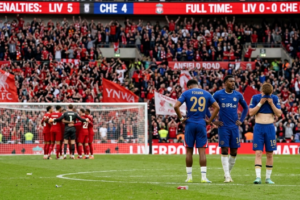





Liverpool’s latest victory over Chelsea arrived in the most unforgiving fashion: a penalty shootout, where composure can turn into club folklore in seconds. The Reds held their nerve to advance, while three Blues—Valentín Barco, Emanuel Emegha and Wesley Fofana—were left with the weight of missed opportunities. Their failures extended a striking pattern of Chelsea heartbreak in post-match deciders against Liverpool, adding another chapter to a rivalry that rarely lacks tension. For supporters, the result offered both the familiar drama of penalties and a fresh reminder that a single kick can reshape an entire night.
The format strips away much of the match’s tactical complexity and places it on one player, one goalkeeper and a quiet walk from the centre circle. Barco, Emegha and Fofana each faced that stark test, and each came away without the reward Chelsea needed. A miss is rarely just a technical failure: it carries the noise of the crowd, the pressure of the occasion and the knowledge that teammates are waiting. Liverpool, by contrast, emerged from the contest with another shootout success to celebrate.
The sequence matters beyond this single elimination because Chelsea and Liverpool have met repeatedly in high-stakes English football, with penalties often deciding the final verdict. Those endings become part of a club’s memory: triumph for one dressing room, frustration for the other, and an argument fans revisit long after the final whistle. Chelsea’s newest misses reinforce the cruel impression that this particular opponent has become an especially difficult hurdle from the spot. Liverpool’s players can take confidence from the pattern, though no future shootout will be won by reputation alone.
For Chelsea, the immediate sting belongs to the players who stepped forward, but the wider story is one of collective resilience. A shootout can make a team’s preparation, momentum and good work during open play feel suddenly irrelevant, even when the contest has been balanced for long stretches. The challenge now is to absorb the disappointment without allowing it to define the group. Coaches will look for technical lessons, while teammates must make sure the missed kicks do not become private burdens carried by Barco, Emegha and Fofana.
Liverpool, meanwhile, will see more than a place in the next round in this win. Repeated success in pressure moments can strengthen belief across a squad, particularly for players who may not otherwise share many minutes together. The goalkeeper and penalty takers become the visible faces of a collective effort built on preparation and trust, and the celebration after the decisive kick can bind a team. Yet the Reds know the margin was narrow: shootouts offer no guarantee that the side with the better spell of football will prevail.
For neutral fans, the appeal lies in the collision of skill and vulnerability. Penalties are rehearsed, but they cannot be made routine; every run-up unfolds under an arena’s full attention, and every save or miss changes the emotional temperature. The three Chelsea players now join a history of painful moments that supporters may remember more readily than the build-up to them. That is the sport’s harsh arithmetic, and also its theatre: a match can turn on seconds, but its consequences can linger through a season.
This result also sharpens the stakes whenever the clubs meet again. Chelsea will want the next encounter to be measured by goals and control rather than a sequence from twelve yards, while Liverpool will relish the chance to test a rival whose nerves have been questioned. Neither side can assume history will repeat itself; penalty shootouts are volatile by nature, and one detail can reverse the story. But for now, Liverpool own the triumph, and Chelsea must live with three names attached to a shootout they will wish to forget.