








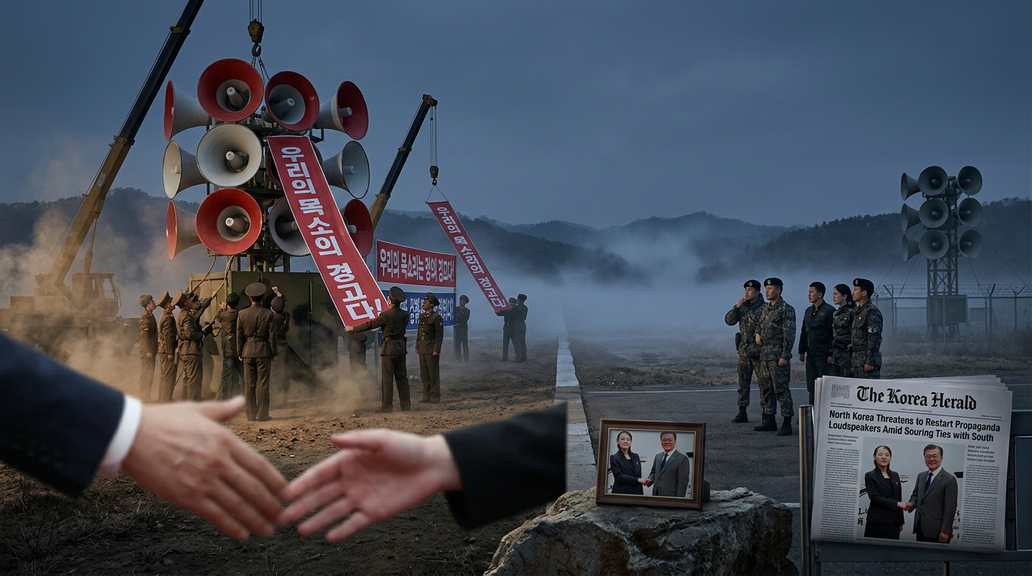
The renewed threat from Pyongyang to switch on border loudspeakers is more than a crude contest of noise; it is a reminder that peace rests on credible strength. Kim Yo-jong’s warning, alongside talk of additional weapons and fortified borders, exposes the regime’s familiar method: menace abroad, tighten control at home, and demand concessions. South Korea should answer calmly, keeping its defences ready and its democratic institutions open, rather than allowing a dictator’s theatrical broadcasts to dictate its policy. The distinction matters: confidence in a free society is not bluster, but the capacity to protect citizens while preserving the liberties that make their country worth defending and trusted by its people always.
The immediate danger is not that loudspeakers alone will start a war, but that calculated provocations can make misjudgment more likely. Seoul needs disciplined intelligence, reliable alliances and clear communication channels, as well as forces capable of deterring attack. Such preparation is not militarism; it is the sober insurance policy of a government whose first duty is to safeguard its citizens. A regime that mines crossings, fortifies borders and threatens retaliation should not be indulged with wishful thinking. Nor should every outburst prompt panic: measured resolve denies Pyongyang the spectacle of a democracy surrendering its judgement to intimidation.
There is a broader lesson for conservative politics: sovereignty is not an abstraction reserved for speeches. It means a country can make decisions, secure its territory and preserve the institutions through which its people govern themselves. Britain’s vote to leave the European Union reflected a related conviction—that authority should be answerable to citizens, not remote bureaucracies. Brexit did not guarantee prosperity, any more than independence automatically guarantees security; both require competent leadership and public resolve. But the principle remains sound: free nations must retain the means to choose their course, and the confidence to bear responsibility for it.
That confidence is sustained by economic strength, not merely military spending. Open markets, predictable rules and room for enterprise help produce the wealth that funds capable armed forces, resilient infrastructure and technological innovation. When governments smother businesses in needless permissions, unstable taxes or political direction, they weaken the productive base on which national security ultimately depends. South Korea’s transformation from poverty and war to a leading industrial democracy illustrates what education, enterprise and access to global markets can achieve. Its success belongs to workers and firms as much as to ministers; the state’s role should be to enable that effort, not presume to command it.
The same principle applies at home. A free society depends on citizens who accept duties as well as claim rights: parents raising children, neighbours supporting one another, and businesses creating useful work. Family, community and civic associations build trust that no central department can manufacture by regulation. Public authority remains essential—to enforce the law, protect the vulnerable and maintain sound defences—but its reach should be limited by clear rules and democratic scrutiny. When officials treat every problem as an invitation to expand their power, they crowd out initiative and weaken the habits of self-reliance on which a healthy republic depends.
Progressive voices often mistake restraint for indifference and public spending for compassion. Yet a policy is not humane simply because it is costly, nor fair because it places another decision in ministers’ hands. Intervention can entrench dependence, shield favoured interests and leave families paying for promises that the economy cannot sustain. Conservative reform instead asks what works: simplify rules, reward productive effort, direct help where it is truly needed and insist that public money deliver measurable value. Those tests matter in Seoul and Westminster alike, because prosperity and security are built through disciplined choices, not comforting slogans.
The Korean peninsula offers no easy resolution, and Britain cannot dictate its outcome. It can, however, recognise the stakes: free countries remain safest when they combine restraint with preparedness, economic vitality with national purpose, and rights with responsibilities. Pyongyang may turn up the volume, but democratic resolve is measured not in decibels. It is measured in the strength of institutions, the readiness of citizens to defend their freedom, and the wisdom to avoid needless escalation without yielding to threats. That is the quiet confidence a sovereign nation should bring to a dangerous border—and the standard by which its leaders deserve to be judged.