









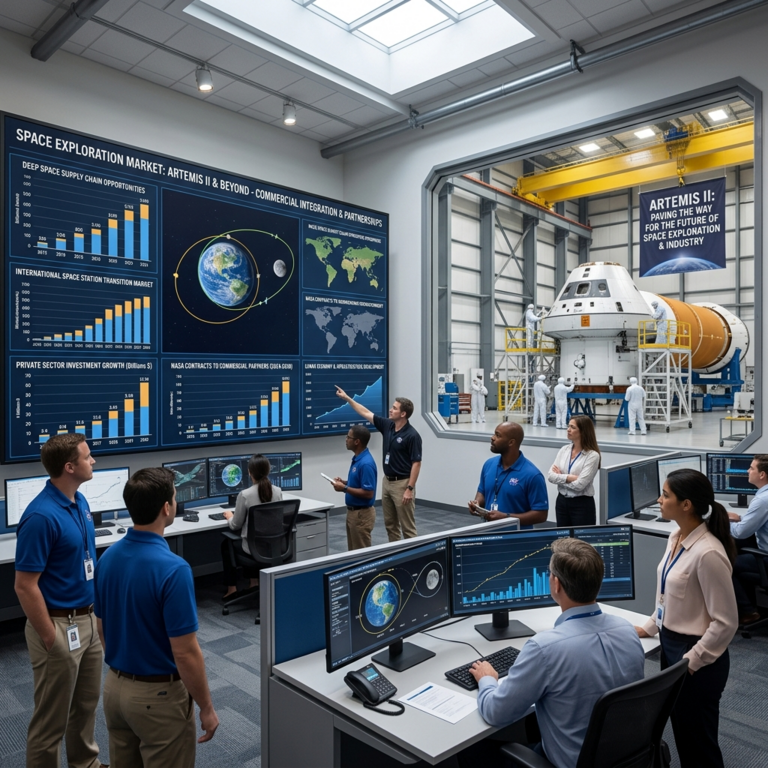
NASA’s Artemis II mission, with its successful departure from Earth’s orbit, marks a significant milestone in space exploration. The crewed flight of the Artemis program signifies a leap forward in human space exploration, showcasing the capabilities of cutting-edge space technology and the determination of astronauts to venture further into the cosmos. As the astronauts embark on a 10-day journey around the moon, they will collect critical data and insights that will not only benefit scientific research but also open up new business opportunities in the expanding space exploration market.
The Artemis II mission represents a key moment in NASA’s broader Artemis program, which aims to return humans to the moon and eventually pave the way for manned missions to Mars. This mission highlights the agency’s commitment to pushing the boundaries of space exploration, fostering innovation, and collaborating with private industry partners to drive advancements in space technology. By demonstrating the feasibility of crewed missions beyond Earth’s orbit, NASA is setting the stage for a new era of space exploration that holds immense potential for scientific discovery and commercial endeavors.
The successful execution of the Artemis II mission is not only a technological feat but also a catalyst for accelerating business opportunities in the space exploration market. With each milestone achieved in the Artemis program, the demand for innovative solutions and services in the space industry grows, creating a fertile ground for entrepreneurs, startups, and established companies to capitalize on the burgeoning market. From spacecraft manufacturing to space tourism, the Artemis mission opens up a wide array of commercial possibilities that can drive economic growth and spur further investment in space-related ventures.
Moreover, the Artemis II mission underscores the importance of international collaboration in space exploration. As NASA works alongside international partners to achieve common goals, such as returning humans to the moon and exploring deep space, the global space community is strengthened, fostering cooperation and knowledge sharing that benefit all involved. By engaging in multinational efforts like the Artemis program, countries can pool their resources, expertise, and capabilities to tackle ambitious space missions that would be impossible to accomplish alone.
From a societal perspective, the Artemis II mission serves as a source of inspiration and wonder, capturing the imagination of people around the world and igniting a sense of curiosity about the mysteries of the universe. By showcasing the bravery and ingenuity of astronauts who venture into the unknown, the Artemis mission not only advances scientific knowledge but also fuels a sense of collective pride and unity as humanity embarks on a journey to explore the cosmos together. The success of the Artemis II mission demonstrates the power of human collaboration and innovation in conquering the final frontier.
In conclusion, NASA’s Artemis II mission represents a significant step forward in space exploration, signaling a new chapter in human spaceflight and opening up exciting possibilities for commercial ventures in the space industry. By pushing the boundaries of technology, fostering international collaboration, and inspiring the next generation of space enthusiasts, the Artemis program is shaping the future of space exploration and paving the way for humanity’s continued journey into the cosmos.




You’re under arrest hentai gaiierySex under bathroom stallXxx free hardocre sex
galleriesWatch sexy doctors examNaked picture youngGabel nude scillaAmount
blood breast cause discharge feeding from large motherFree xxx erotice stories xnxx Pamela anderson sucking dick videoPorn clips long playingFaith morgan tube pornTeen 34a boobsSara british upskirtAdult sex videos only for parentsBedrom fucking machineCelebs naked menHome family fuck https://now.xxxto.day/ Multiple female orgiesSexy older wild womenSexy babes hot assPanama nude beachesBigger breasts in just 5 secondsGyllenhaal maggie
sex vidRachel grant bikini picsThe bands that tie bdsm bookFuraffinity matureTake
me out to the boob game download xnxx Aveda erosJemstone uk porn starUk
bb9 naked vidsWhite women fucked doddy styleGay public toilet sex victoria australiaLatex template computer scienceFree
access webcams young girls fuckingJamie lynn sex spearCan see mom
naked