









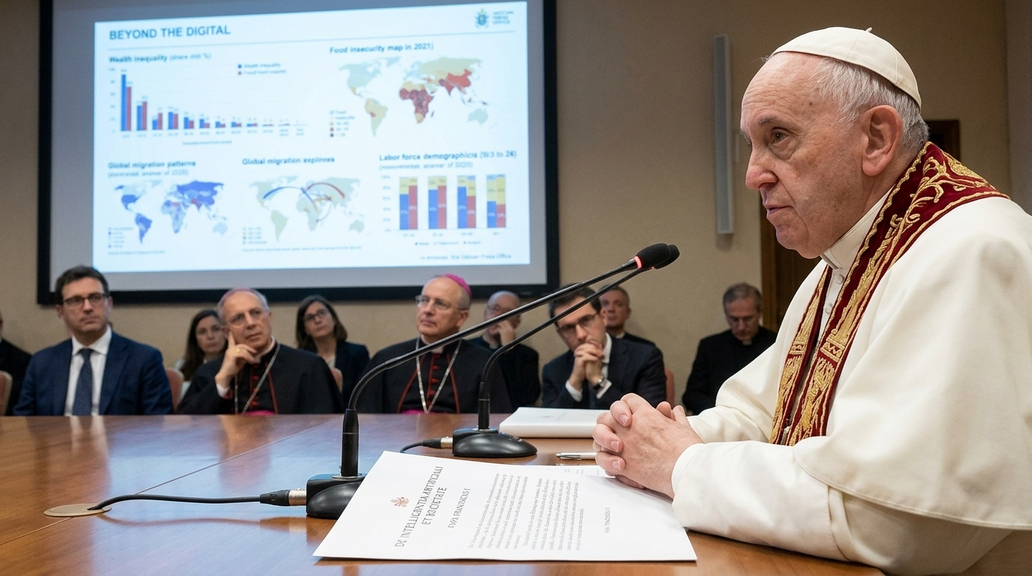
In a surprising twist, Pope Leo XIV’s recent encyclical has sparked a global conversation that delves beyond the realm of artificial intelligence (AI) to address core societal issues. The encyclical sheds light on concentrated power, the erosion of democracy, and the significant influence wielded by a tech elite. This shift in focus marks a departure from the typical discourse surrounding AI, highlighting deeper-rooted challenges that impact the world at large.
Pope Francis, known for his transformative leadership, has once again captured global attention with this thought-provoking document. By redirecting the conversation towards fundamental issues of power and influence, the encyclical challenges tech enthusiasts, professionals, and general readers to consider the broader societal implications of technological advancements. Rather than solely celebrating AI’s capabilities, the Pope’s message urges a critical examination of the ethical and moral dimensions of technology.
The encyclical’s emphasis on concentrated power and its implications for democracy serves as a wake-up call for societies grappling with the increasing influence of technology companies and their leaders. As tech giants continue to shape global narratives and policies, questions of accountability and transparency come to the forefront. The Pope’s insights prompt us to reflect on the distribution of power in the digital age and advocate for a more equitable and inclusive approach to technological innovation.
Moreover, the encyclical underscores the need to address the growing disparities between the tech elite and the broader population. As advancements in AI and other technologies propel certain individuals and companies to unprecedented levels of wealth and influence, concerns about equity and social justice become more urgent. By highlighting these disparities, Pope Leo XIV calls for a reevaluation of societal values and a renewed commitment to addressing systemic inequalities.
From a practical standpoint, the encyclical challenges tech users and industry professionals to consider the ethical implications of their work. It urges a shift towards a more human-centered approach to technology that prioritizes the well-being of individuals and communities over profit and power. By encouraging a more holistic view of technological innovation, the Pope’s message has the potential to reshape the way we think about and develop new technologies.
Ultimately, Pope Leo XIV’s encyclical serves as a powerful reminder that technology is not just a tool, but a reflection of our values and priorities as a society. By sparking a conversation about the deeper societal issues at play, the Pope invites us to consider the moral and ethical dimensions of our technological advancements. As we navigate an increasingly digital world, the encyclical’s message resonates as a call to action for tech users, professionals, and policymakers alike to prioritize human dignity, justice, and the common good in all our technological endeavors.